
Deep Dive: What Happens When Cars Drive Themselves
Autonomous driving reached commercial scale in 2025. The robotaxi market alone is valued at over $11 trillion. But the bigger story is what happens to the industries built around human drivers…
The average American worker spends ~225 hours per year, nearly six full working weeks, commuting. These drivers are physically occupied and cognitively constrained. Autonomous driving can give back these hours, but also protects something even more important.
In 2025, there were over 36K traffic fatalities on US roads. Waymo’s peer-reviewed safety data across 170 million driverless miles shows 92% fewer serious crashes or fatal injuries than human drivers in the same conditions. The autonomous driving revolution is removing one of the largest causes of accidental death in America.
2025 was the inflection point:
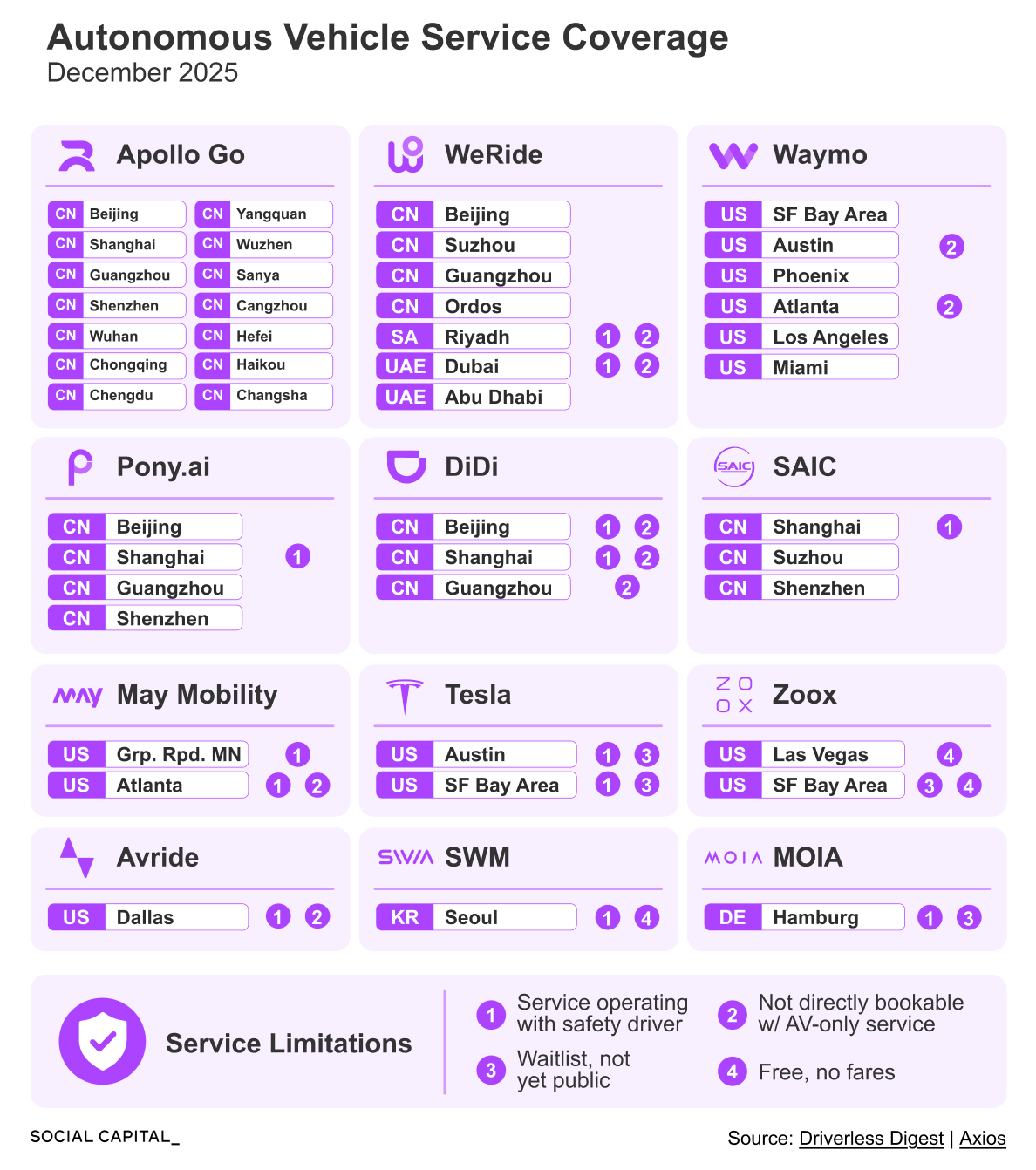
Autonomous ride-hailing is now commercially available in 28 cities across five countries
Waymo surpassed 20 million cumulative paid driverless rides by the end of 2025 and is now delivering 500,000 rides every week
Last-mile delivery robots completed millions of autonomous deliveries on college campuses and city sidewalks across the US
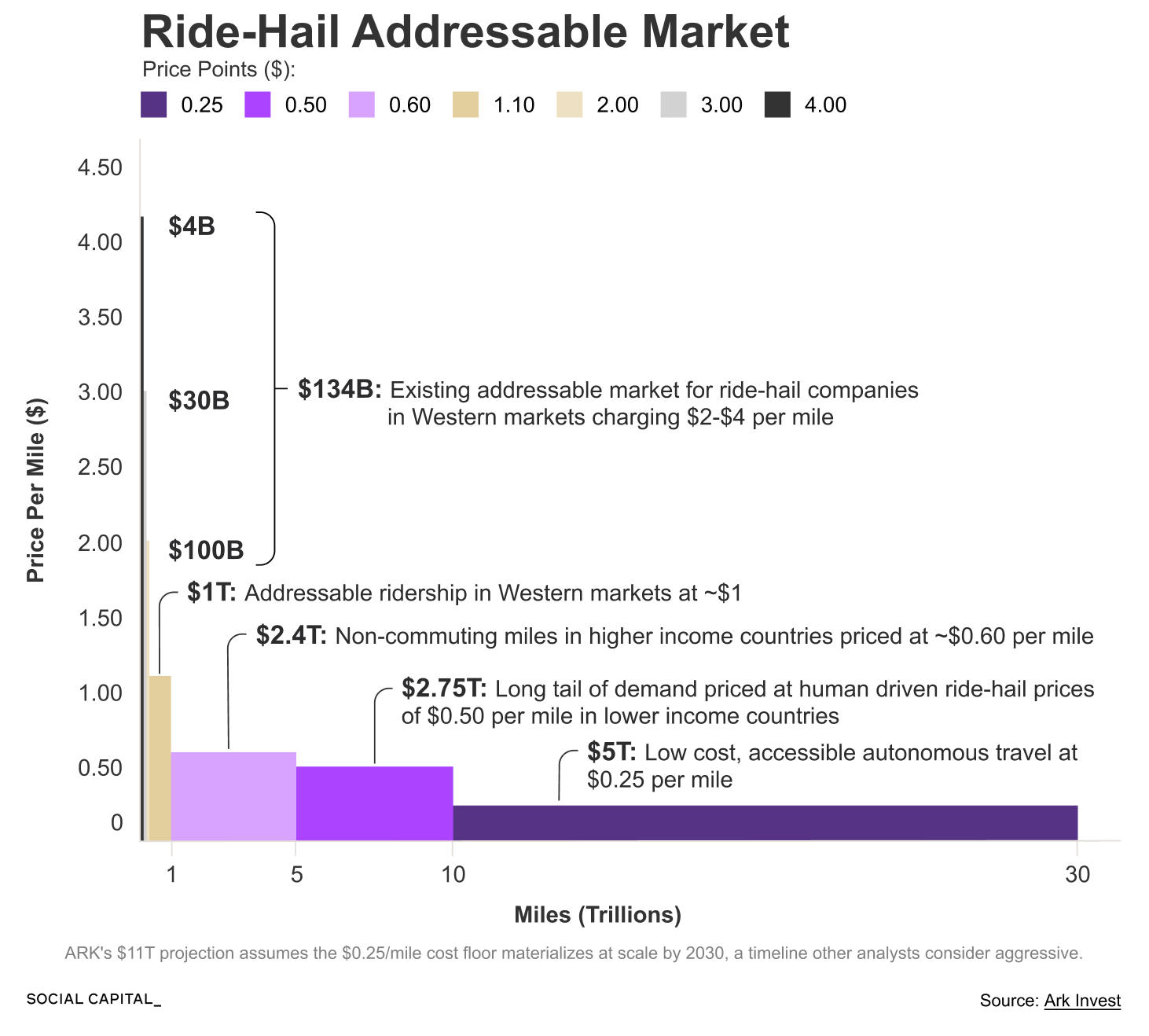
The key metric to watch will be the price of a mile.
A personally owned vehicle costs $1.10 per mile when you factor in insurance, maintenance, depreciation, and fuel. The price gap between autonomous cars and personally owned cars continues to close as fleets scale and hardware costs fall. ARK Invest estimates the robotaxi market at $11 trillion once cost per mile hits $0.25.
I’m keeping a close eye on this sector:


And robotaxis are only one piece.
Goldman Sachs expects 65% of US car sales could be autonomous vehicles by 2040. Aurora plans 200+ driverless trucks by the end of 2026 and thousands by the end of 2027. Autonomous trucks target the $900 billion US trucking industry, where labor accounts for 45% of per-mile costs. Last-mile delivery robots are also solving the most expensive leg of e-commerce logistics. Additionally, the industries that exist because of human error, including car insurance, personal injury law, and traffic enforcement, face a structural rethink.
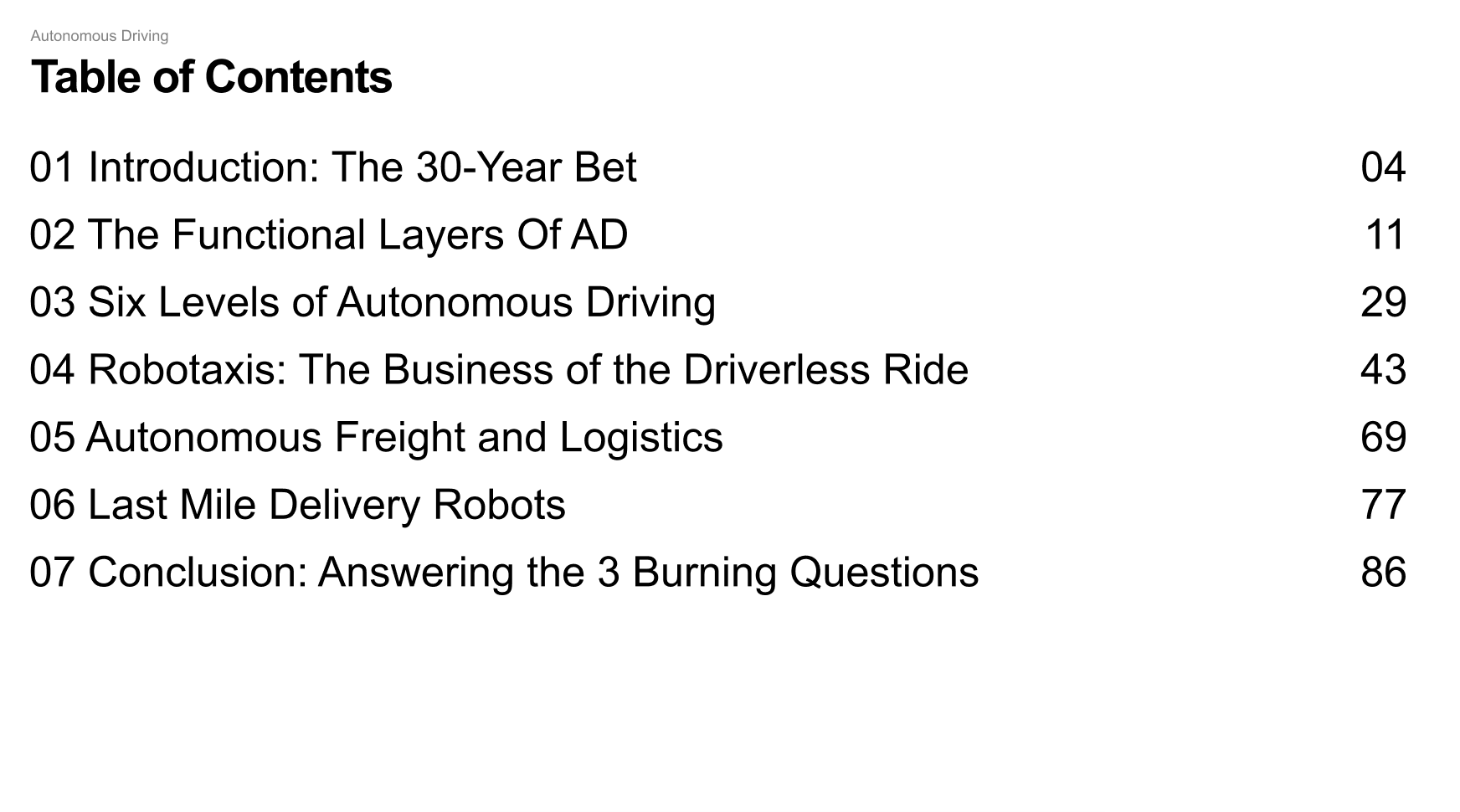
My research team at Social Capital mapped the technology, the economics, and who actually wins. The result is a 92+ page deep dive.
Here is what we cover inside:
What happens inside an autonomous car and why it took 30 years to get here.
The six levels of autonomous driving, where we are today, and what Level 5 actually requires.
Tesla vs. Waymo: two completely different bets on the same problem and their software strategy
How safe and cheap autonomous driving already is compared to a human driver, mile for mile.
The $11 trillion robotaxi race: who is winning, where regulation is the real bottleneck, and what the Arizona model shows.
How China is closing the gap on Waymo in 2026
The industries beyond ride-hailing that get disrupted when human error disappears
Read the deep dive and let me know what you think.
Chamath
Disclaimer: The views and opinions expressed above are current as of the date of this document and are subject to change without notice. Materials referenced above will be provided for educational purposes only. None of the above will include investment advice, a recommendation or an offer to sell, or a solicitation of an offer to buy, any securities or investment products.
Deep Dive PDF below ↓