
Deep Dive: Why Are Billions Going Into Critical Minerals?
We are still completely underestimating how short we are in terms of the global demand and supply dynamics of a handful of critical minerals that we need...
On the 2026 All-In Predictions episode, I made a simple point:
We are still completely underestimating how short we are in terms of the global demand and supply dynamics of a handful of critical minerals that we need.
What Are Critical Minerals
The U.S. defines critical minerals as materials that are essential to national security and economic stability, yet vulnerable to supply chain disruptions.
To build the 2025 critical list, the U.S. Geological Survey (USGS) modeled more than 1,200 supply-disruption scenarios, ranking minerals by how severely a cutoff could hit the U.S. economy.
This list grew from 35 minerals in 2018 to 50 in 2022 and 60 in 2025, as AI, defense, and industrial demand pushed more materials past the risk threshold.
The Input Layer Beneath Every Technology
Every EV battery, fighter jet, data center, cell tower, fertilizer system, and oil well depends on them.
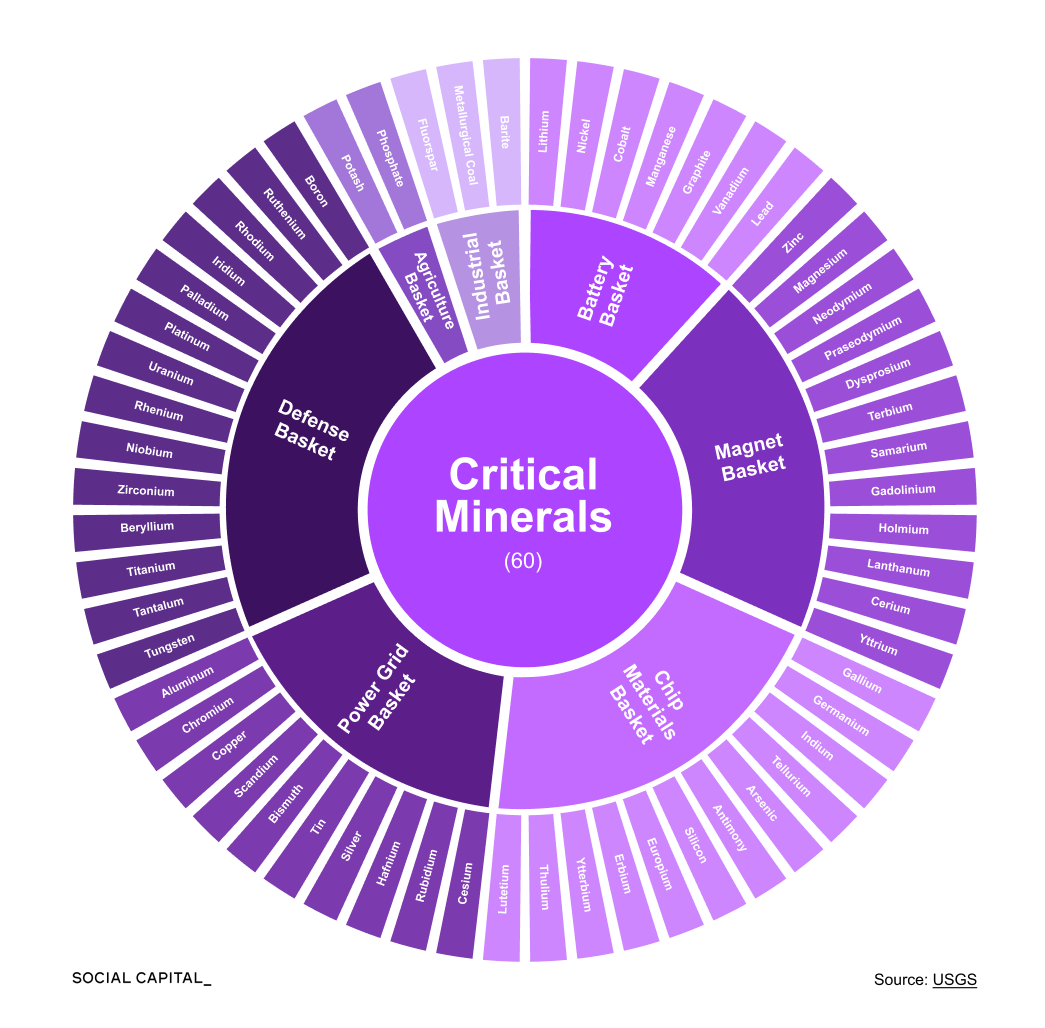
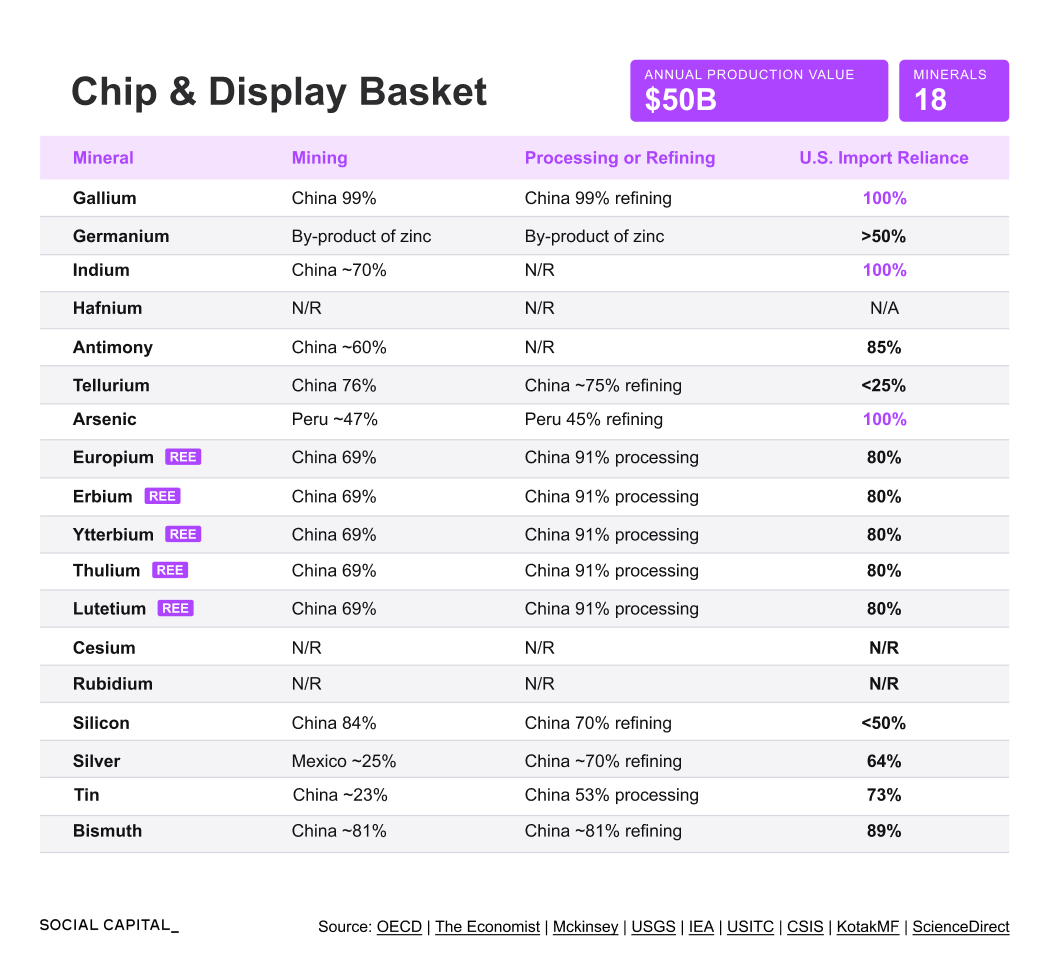
The 60 U.S.-designated critical minerals underpin industries worth hundreds of billions across seven baskets: batteries, power grid, magnets, chips and displays, defense, agriculture, and industrial.
Whoever solves cheap energy wins the century, and critical minerals are the first input into that race. Right now, one country has a decades-long head start.
The New Geopolitical Race
In 1992, China classified rare earth elements as protected strategic resources.
Deng Xiaoping famously declared, “The Middle East has its oil. China has rare earths.” 16 of the 17 rare earth elements are critical minerals, used in batteries, magnets, and defense technology.
China spent the next 15 years building the industry the West had let go of: cheap labor, lax environmental standards, and low costs pulled production to China.
By 2010, China had established dominant control over supply, and demand then exploded. Today, China controls about 85% of processing.
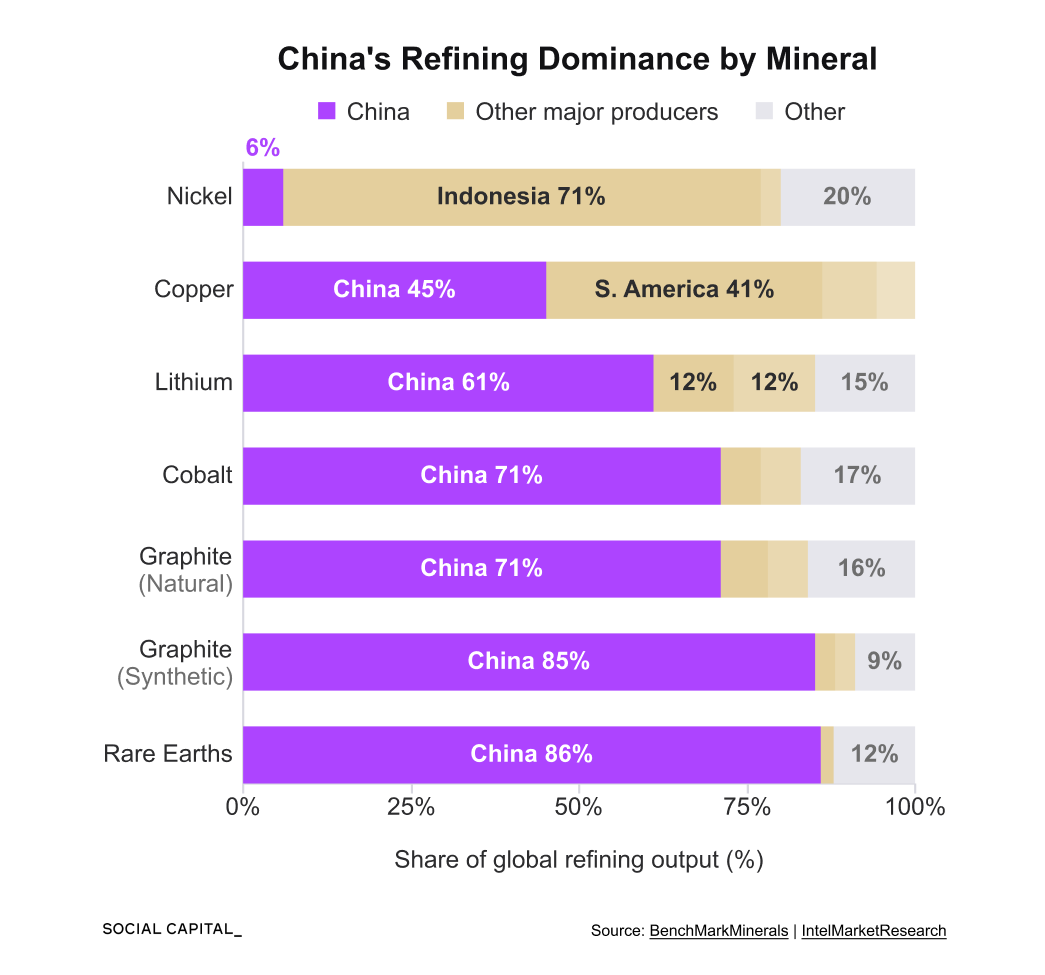
While the U.S. has minerals in the ground, it cannot easily process them due to a combination of complex bottlenecks that run deeper than they look.
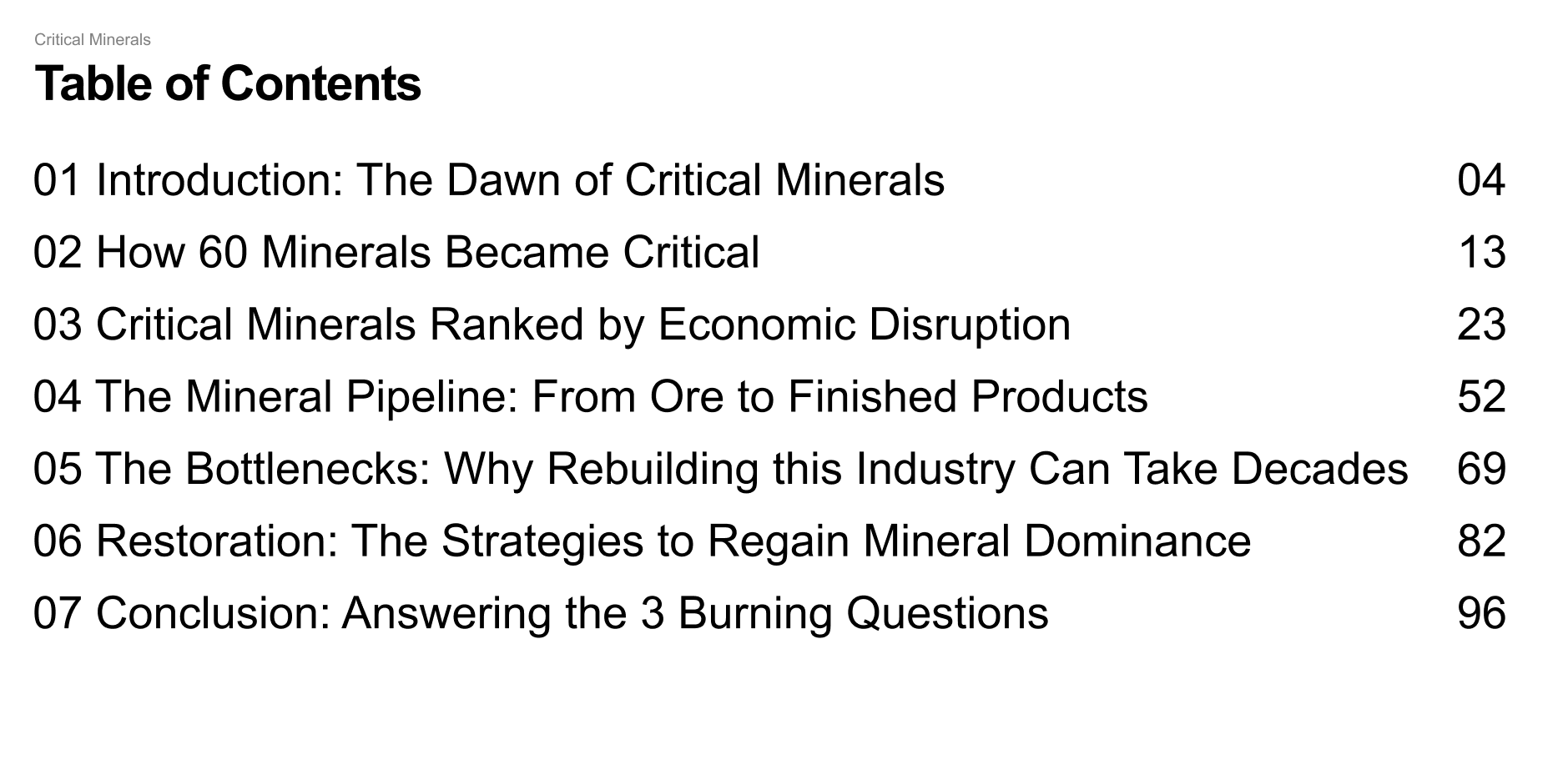
This 103-page deep dive examines critical minerals landscape and economy from the ground up:
What they are and why they matter
The top-ranked minerals where a supply disruption would hit America hardest
How the supply chain works from mine to finished product
Where the biggest chokepoints and bottlenecks lie
How the U.S. and its allies are trying to rebuild capacity
Where private capital is beginning to find investable opportunities
This has been one of our most detailed and important deep dives this year. I hope you find it useful.
Chamath
Disclaimer: The views and opinions expressed above are current as of the date of this document and are subject to change without notice. Materials referenced above will be provided for educational purposes only. None of the above will include investment advice, a recommendation or an offer to sell, or a solicitation of an offer to buy, any securities or investment products.
Deep Dive PDF below ↓