
Deep Dive: The Electric Grid - America’s Biggest Bottleneck of the Decade
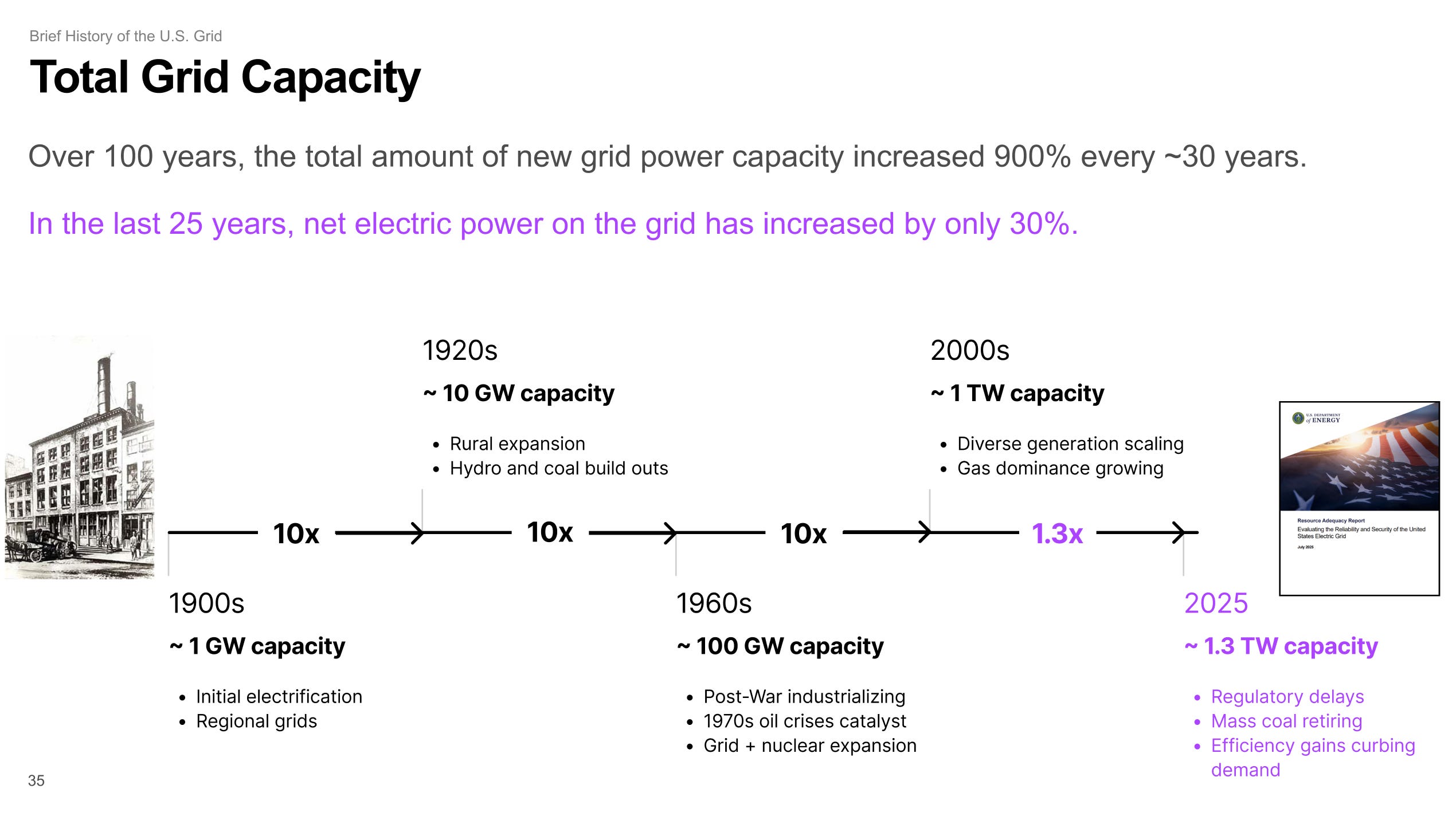
From 1900 to 2000, new grid power capacity increased 10x every 30 years. In the last 25 years, it has only grown 1.3x. The U.S. electric grid is rated by engineers at a D+ and now stands as our...
2/27/26 Update:
In addition to our Deep Dive below, we’re excited to introduce a brand-new way to experience our Deep Dive:
The U.S. Grid Web Experience (Beta): grid.socialcapital.com
We’ve transformed our slide deck into a dynamic web experience, complete with interactive charts, clickable data toggles, and integrated media playback.
While I think our weekly 60-150 page Deep Dives are some of the most comprehensive yet accessible decks you can find, this web experience could be the “Raptor 2 engine” moment for Learn With Me.
I think this web experience makes LwM 10x more engaging and accessible.
Because I think it can be a game-changer, I decided to make it free for everyone: try it for yourself here and let me know what you think.
If the community is as excited about this as I am, we will do our best integrate this experience into future Deep Dives.
*Note: This is a Beta release of a brand-new format. You might stumble across a few bugs or errors, but we wanted to share it with the community early to get your reaction.
Hope you enjoy learning!
//
Energy is the fundamental variable of civilization. It powers our shelters, drives emergency services, and supports every major technological leap. While news cycles focus on the latest AI model weights and GPU availability, not enough attention has gone to the physical machine that makes everything possible.
The U.S. electric grid is the largest interconnected machine in the world, but is rated by engineers at a D+ and now stands as America’s biggest technological bottleneck.
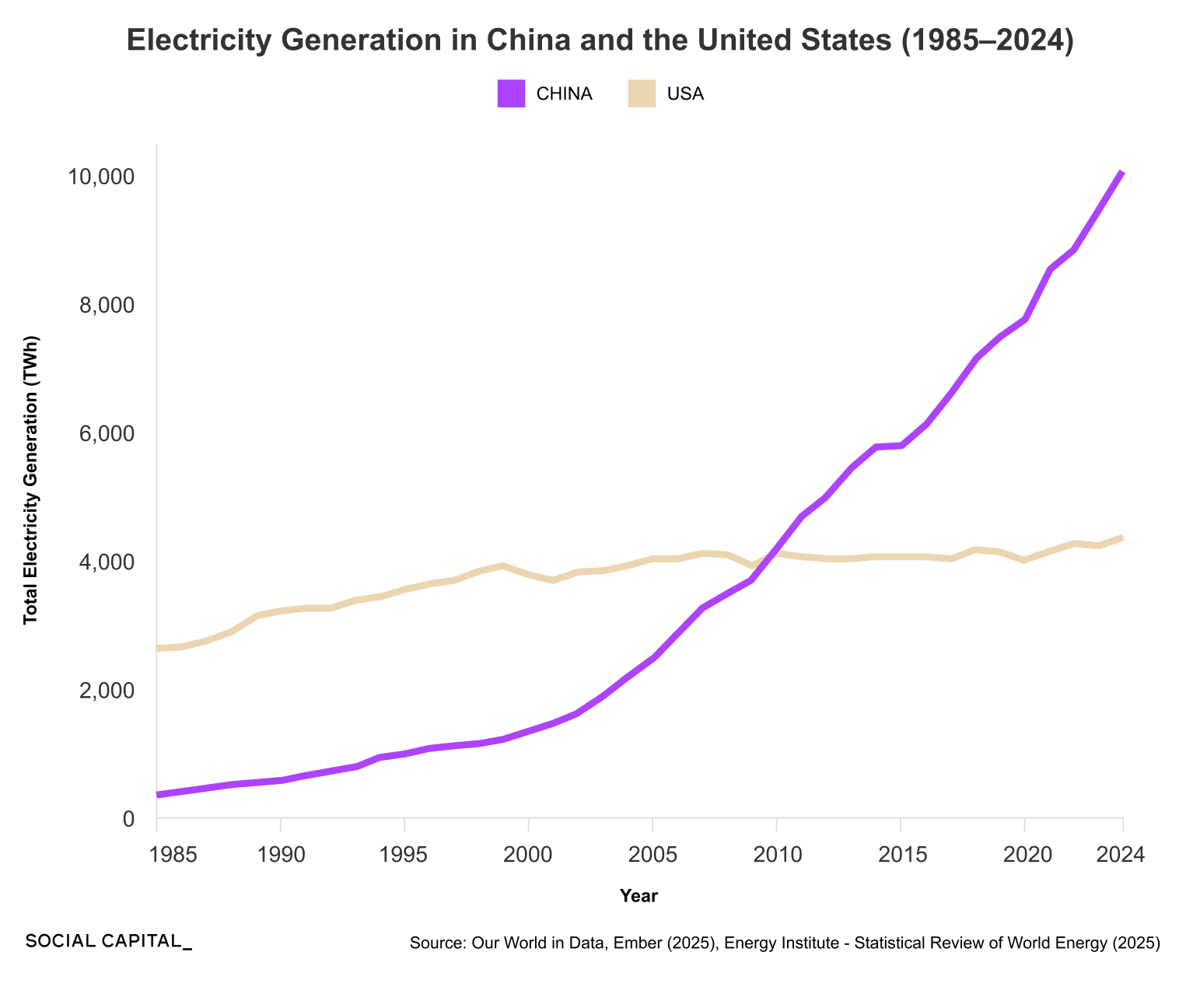
For a century, American power was defined by explosive growth. From 1900 to 2000, new grid power capacity increased 10x every 30 years. In the last 25 years, it has only grown 1.3x. Since 2000, electricity generation has stayed around 4,000 to 4,200 TWh. In the same period, China expanded 7x to roughly 10,000 TWh.
This stagnation was masked with efficiency gains, and retiring coal plants as fast as we built new gas and renewable capacity. That buffer is now gone just as demand begins to surge. AI data centers are inelastic consumers of power. The IEA expects global data center demand to more than double by 2030 to nearly 1,000 TWh, roughly the electricity use of Japan.
Currently, the grid cannot absorb this jump. Critical hardware often exceeds 25 to 40 years of service life. New equipment orders sit in delivery queues into 2028 to 2030. Major transmission projects can take a decade to approve. Limited transfer capacity keeps surplus power from reaching regions with shortages.
The risks are clear, and both the public and private sectors are accelerating efforts to expand the grid. The government is investing in supply chains for transformers, turbines, and battery materials, and restarting nuclear projects that had been stalled for years. The Genesis Mission is directing national research toward nuclear, fusion, and grid modernization.
Private companies are moving fast as well. New natural gas plants are being built for data centers. Utilities are adding new solar, wind, and battery capacity. Storage deployment has grown more than 20x since 2020. Solar costs have fallen almost 90 percent in a decade.
This deep dive opens our energy series. The grid is the logical starting point because it anchors all other energy topics. The goal is to give you a complete understanding of the system that powers the modern economy.
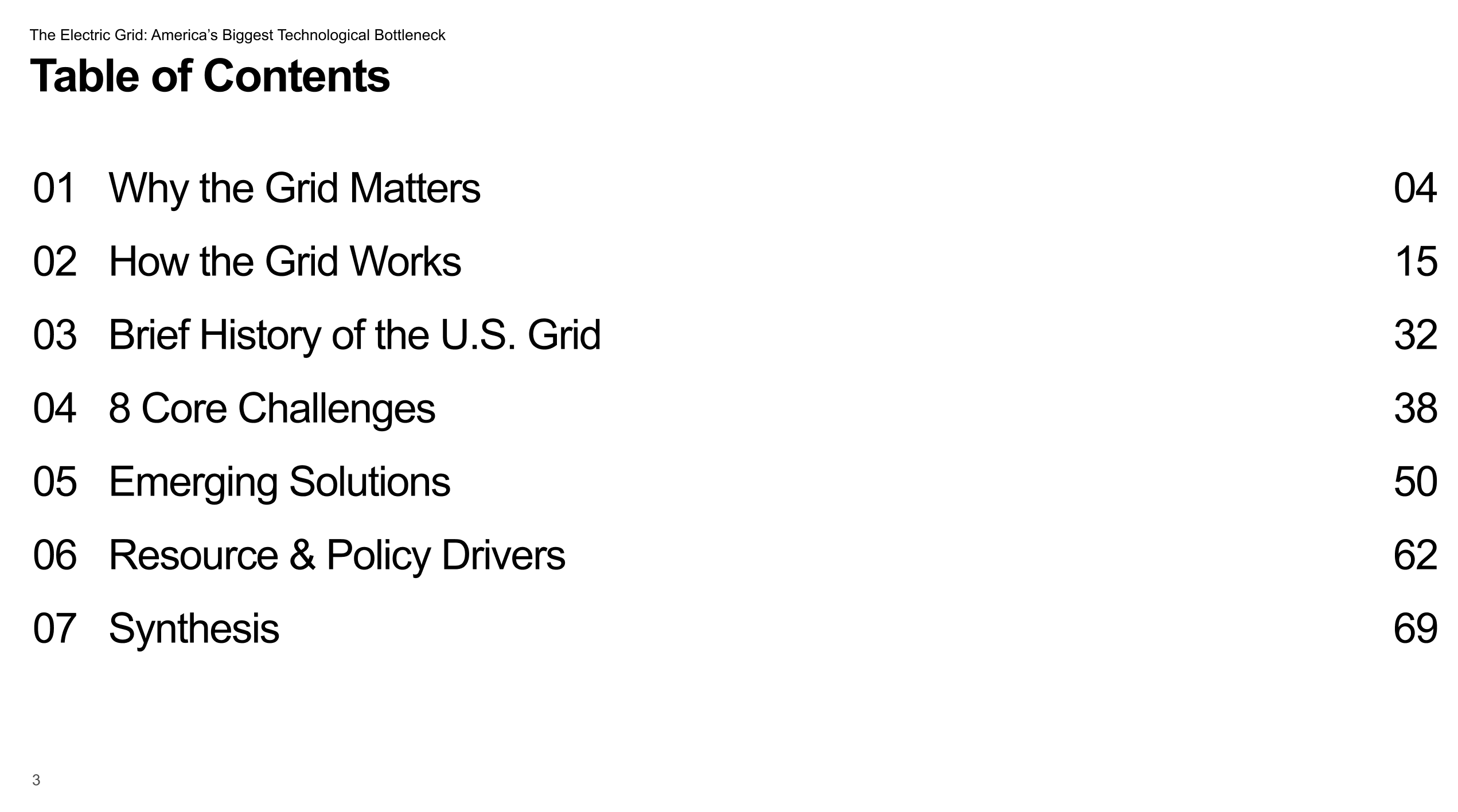
Inside this 80-page Deep Dive, you will learn:
• How electricity is generated across different sources and how it moves through generation, transmission, and distribution
• How the grid works, why growth stopped, and where the real choke points sit
• What must change to support rising demand from AI, industry, and electrification
• How regulatory layers, aging hardware, and supply chain constraints shape and strain grid capacity
I hope you enjoy reading and learning with me. Let me know what you think in our subscriber chat.
Disclaimer: The views and opinions expressed above are current as of the date of this document and are subject to change without notice. Materials referenced above will be provided for educational purposes only. None of the above will include investment advice, a recommendation or an offer to sell, or a solicitation of an offer to buy, any securities or investment products.
Deep Dive below ↓