
The global economy has an impending problem.
While AI is compounding its ability at a historic rate, an aging population and declining fertility rates are already causing labor shortages.
These trends, combined with declining costs of robotics hardware, underpin a compelling case for humanoid robots and physical AI.
According to Morgan Stanley, the humanoid robot market is set to exceed $5 trillion by 2050.
Even in 2025, the larger robotics space saw $21 billion of VC capital invested.
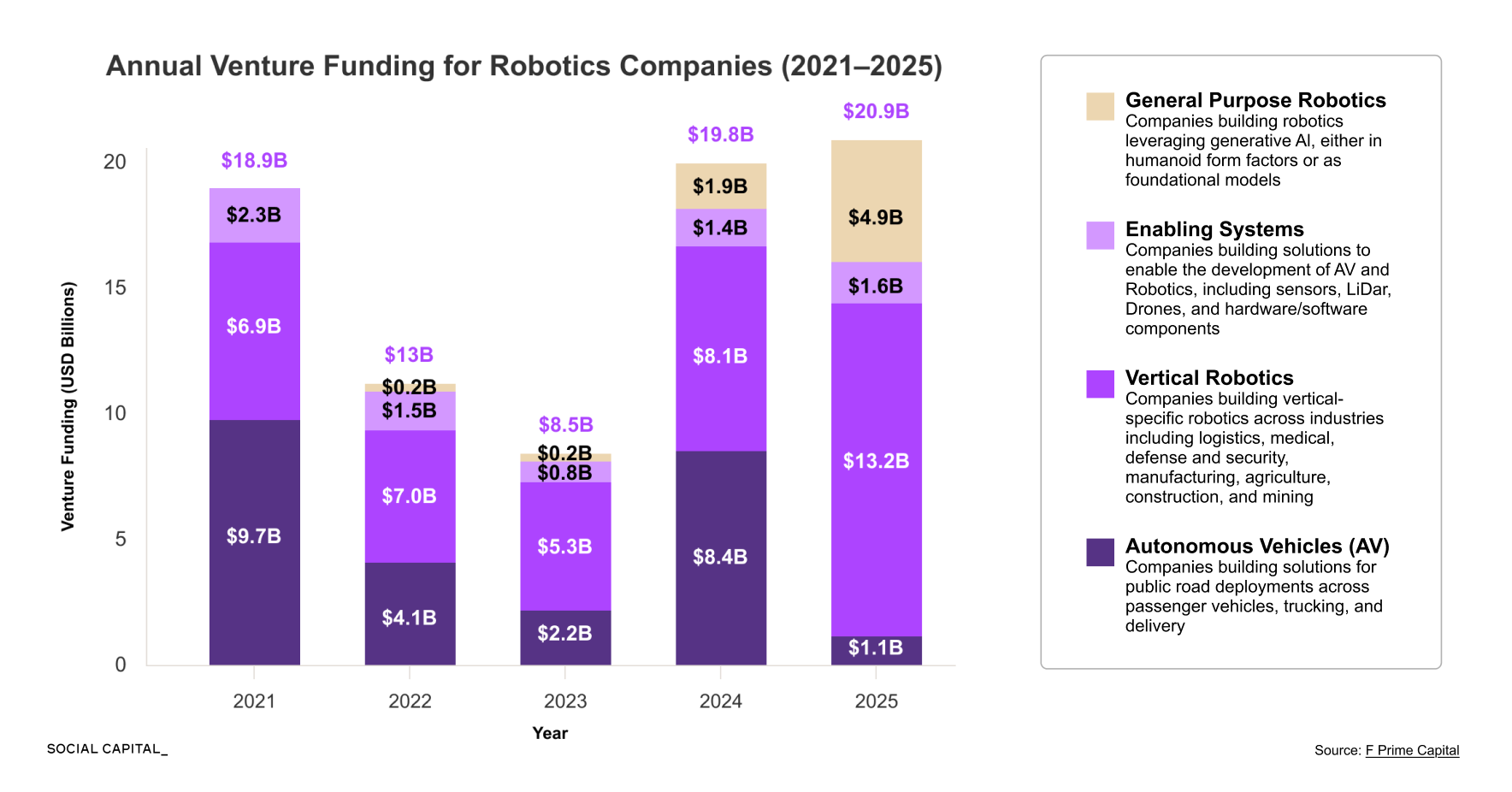
And with a steady increase in patent activity mentioning “humanoid” over the past few years, these machines are already walking onto factory floors.
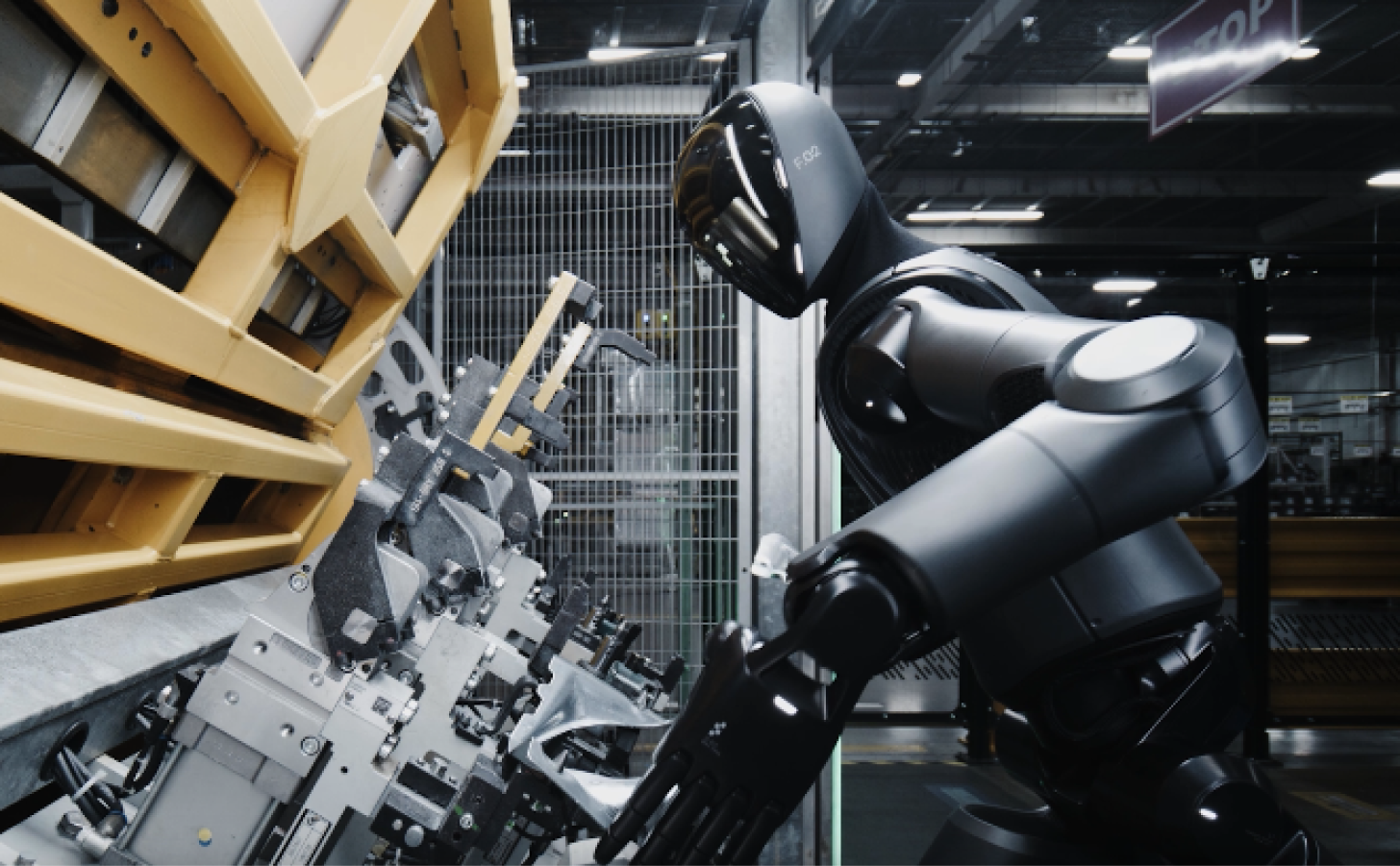
In November 2025, the Figure 02 humanoid contributed to the production of 30,000+ BMW X3 vehicles.
Viral videos of humanoids like Tesla’s Optimus running across factory floors and Boston Dynamics’ Atlas doing roundoff back handsprings have sparked interest in the sector.
Despite early excitement, the question remains:
When is it reasonable to expect humanoid robots to experience a ‘ChatGPT moment’ of mass adoption?
To answer, let’s explore how humanoid robots work and their potential use cases.
How humanoid robots work
A humanoid robot is an artificial helper designed to resemble and replicate human behavior.
They typically feature bipedal locomotion and embedded AI. They can interact socially and perform tasks without major safety risks.
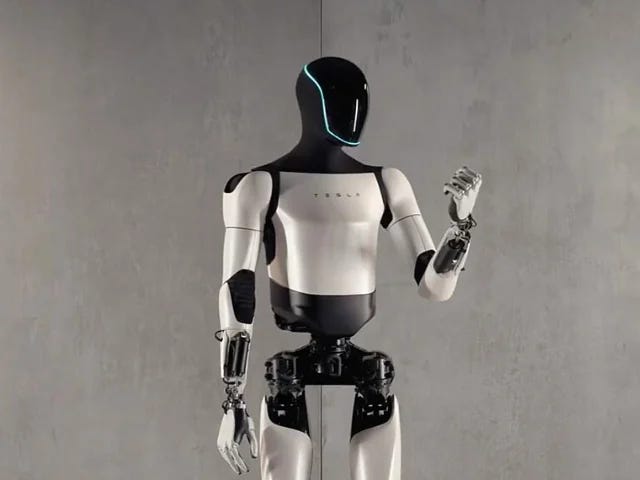
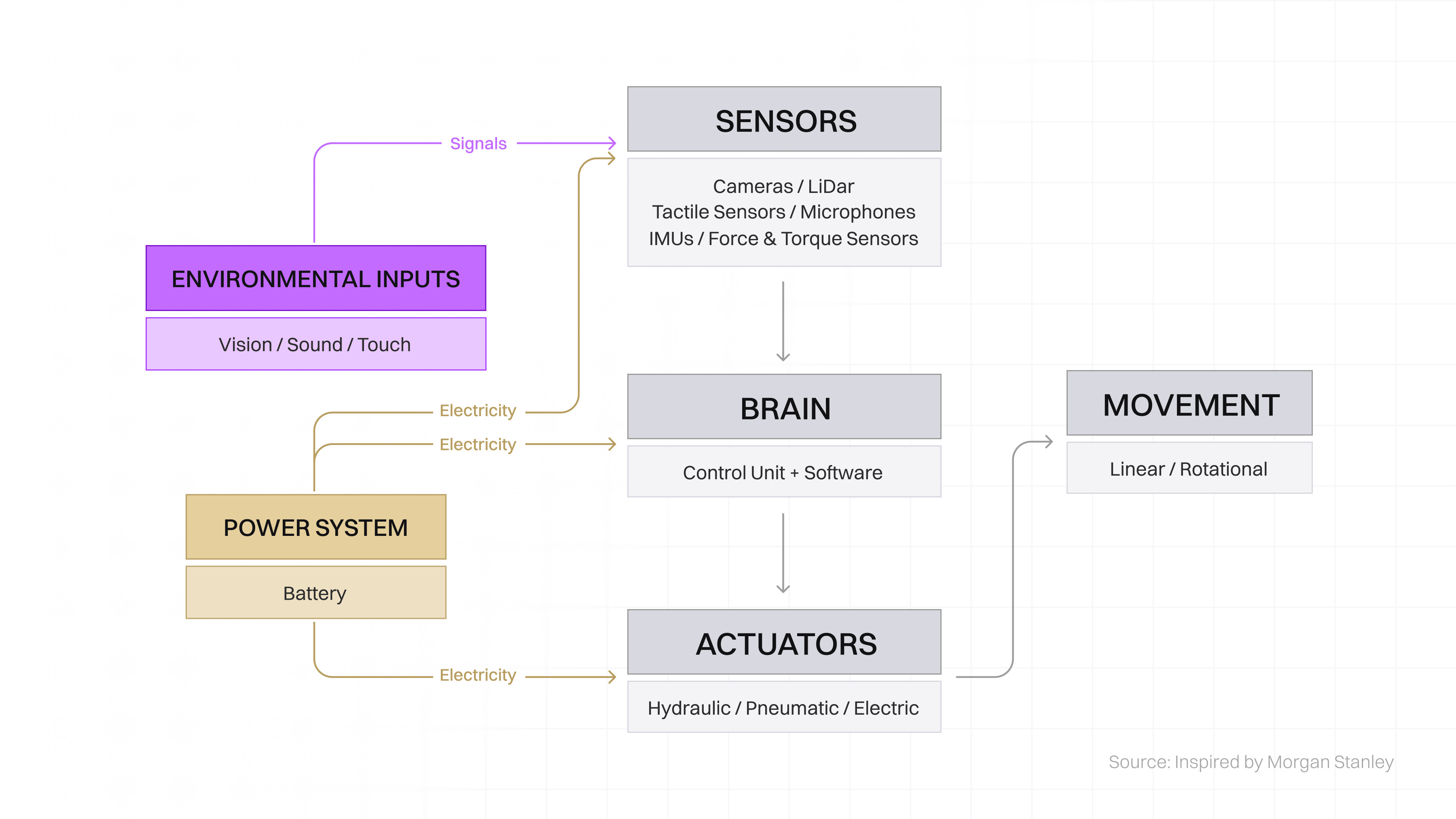
Four interconnected systems give humanoid robots human-like perception, intelligence, and movement:
Sensors (The Sensory System): Cameras, lidar, microphones, and tactile sensors provide the robot with continuous readings of its environment, just as your sensory system does.
Control Unit & Software (The Brain): The intelligence layer that processes sensor data to execute complex functions.
Power System (The Metabolic System): The battery that supplies and manages energy to every component, continuously.
Actuators (The Muscular System): Mechanical devices that convert energy into rotary or linear physical motion (the joints, the grip, the movement)
This is a flow of how they usually work:
Why humanoids instead of single-purpose machines
For most of human history, productive output was a function of human muscle. Agriculture, manufacturing, logistics, and construction were all built around the physical limits of the human body.
Because humans did the work, the built world standardized around human form: doorways, staircases, countertops, and tools are all designed for two arms, two legs, and hands that grip.
Redesigning every factory, warehouse, and home around task-specific machines would be unfeasible.
A humanoid robot that fits into existing infrastructure doesn’t need the world to change around it.
Near-term use cases focus on structured, predictable settings, enabling a robot to learn quickly, make mistakes cheaply, and improve rapidly.
Ranked by timeline and complexity, here’s how the use cases will likely break down:
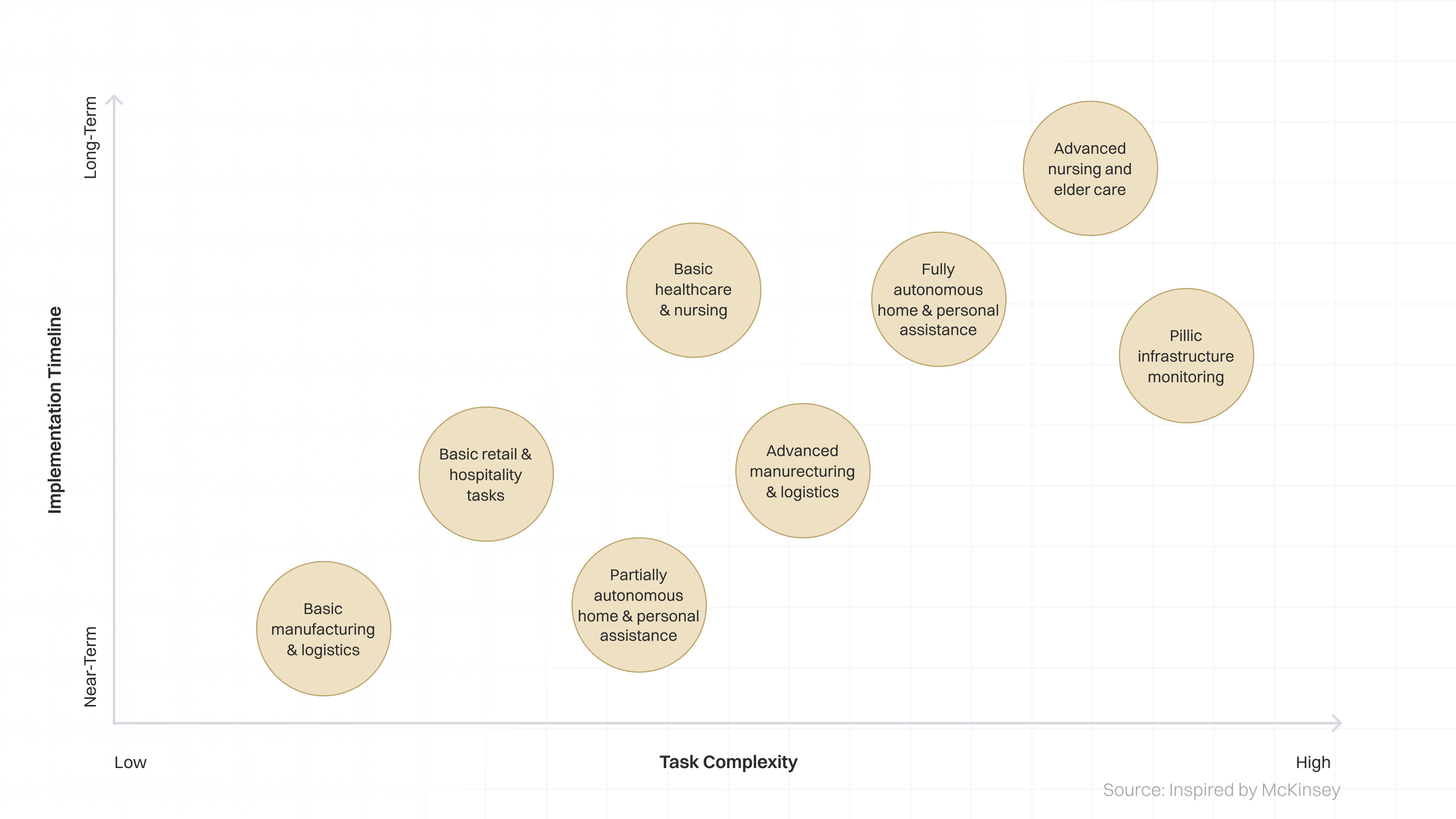
Humanoid Robots will have the highest impact in these 7 areas:
Domestic Assistance: Supporting mobility needs, handling household chores, and providing medication reminders.
Manufacturing: Assisting assembly tasks, moving tools and parts, inspecting finished products.
Security & Monitoring: Patrolling facilities, investigating alerts, and assisting in emergencies.
Customer Service & Reception: Greeting and directing visitors, answering questions, and managing check-ins or bookings.
Facility Maintenance: Conducting routine inspections, performing minor repairs, cleaning, and sanitizing spaces.
Healthcare: Assisting nurses, delivering supplies or meals, monitoring patients.
Warehouse and Logistics: Picking and packing items, loading and unloading goods, and moving inventory in warehouses.
By 2050, Morgan Stanley estimates that more than 1 billion humanoid robots could be working globally, with a market size of over $5 trillion. This is one of the biggest opportunities in the AI era.
However, the path from exciting viral hype demos in controlled environments to real-world deployment at scale is neither straightforward nor solved yet. Operating beyond predefined conditions requires breakthroughs in hardware design, systems engineering, and scaled manufacturing.
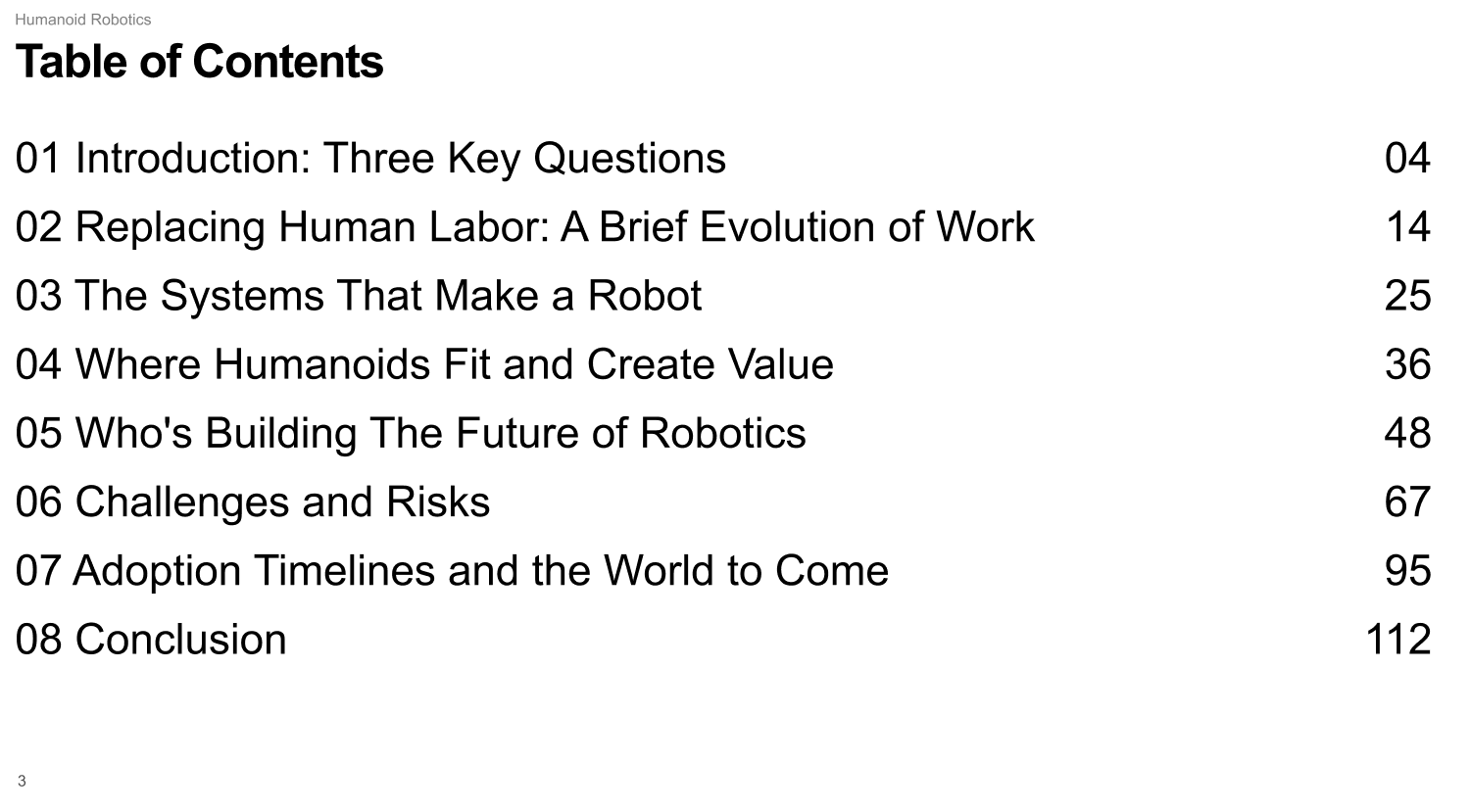
That gap is why our research team at Social Capital spent months studying humanoid robots from first principles. Not just what looks impressive today, but how these systems are built, where the constraints lie, and what a credible deployment roadmap could look like. Here are a few things we covered in our 119-page Deep Dive:
The history of robotics and how we got to the humanoid form factor.
The three biggest risks standing in the way of the mass deployment of humanoid robots.
The full timeline: what adoption looks like in 5, 10, and 20+ years, industry by industry.
The geopolitical race to build humanoid robots, and which countries are already pulling ahead.
How global adoption is unfolding differently across the U.S., China, Europe, and emerging markets.
A deeper breakdown of how these systems actually work: the sensors, the motors, and the AI making real-time decisions.
Physical AI will be a major component in our AI Stack Deep Dive and 2025 Annual Letter.
Let me know your thoughts in the group chat after reading.
Chamath
Disclaimer: The views and opinions expressed above are current as of the date of this document and are subject to change without notice. Materials referenced above will be provided for educational purposes only. None of the above will include investment advice, a recommendation or an offer to sell, or a solicitation of an offer to buy, any securities or investment products.
Deep Dive below ↓