
Deep Dive: How Close Are We to Living Longer?
Cancer, heart disease, dementia, and type 2 diabetes are funded, researched, and treated as separate problems. However, they share one underlying driver…
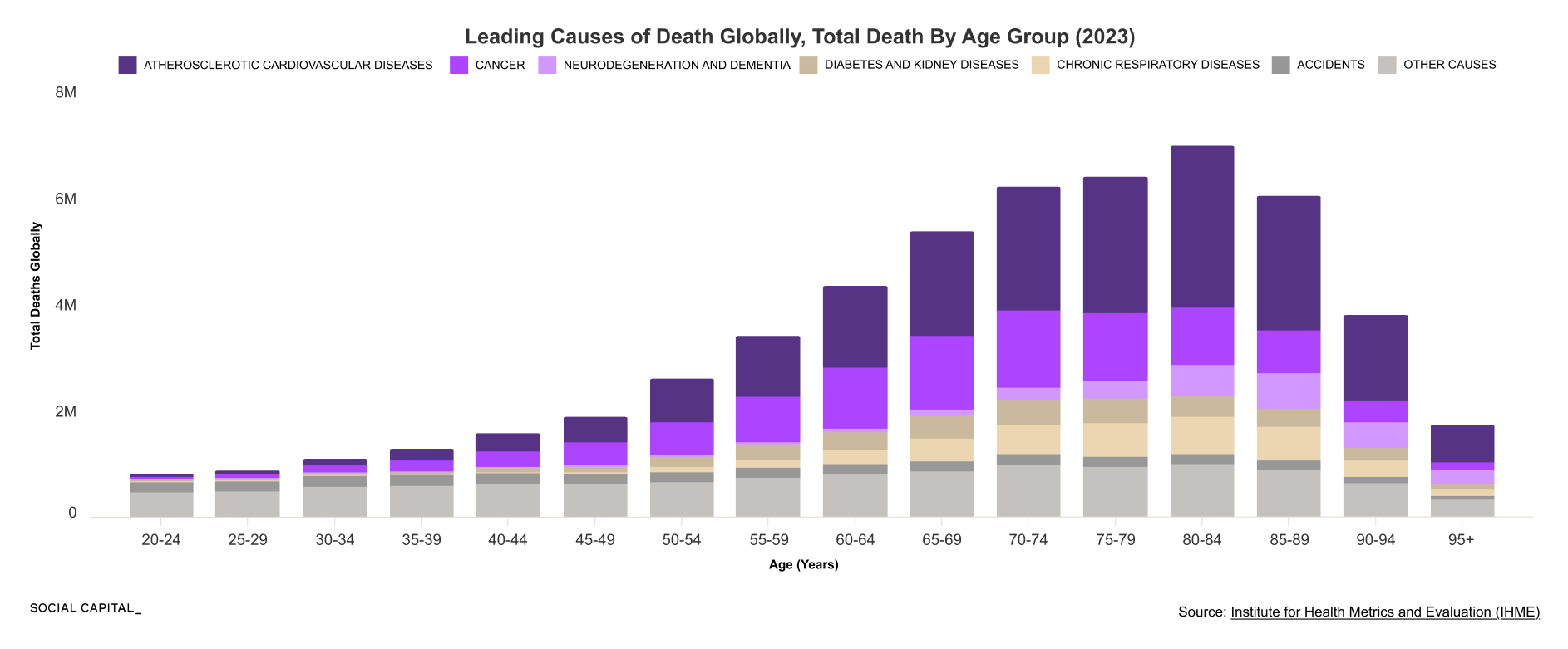
Cancer, heart disease, dementia, and type 2 diabetes are funded, researched, and treated as separate problems. However, they share one underlying driver: age.
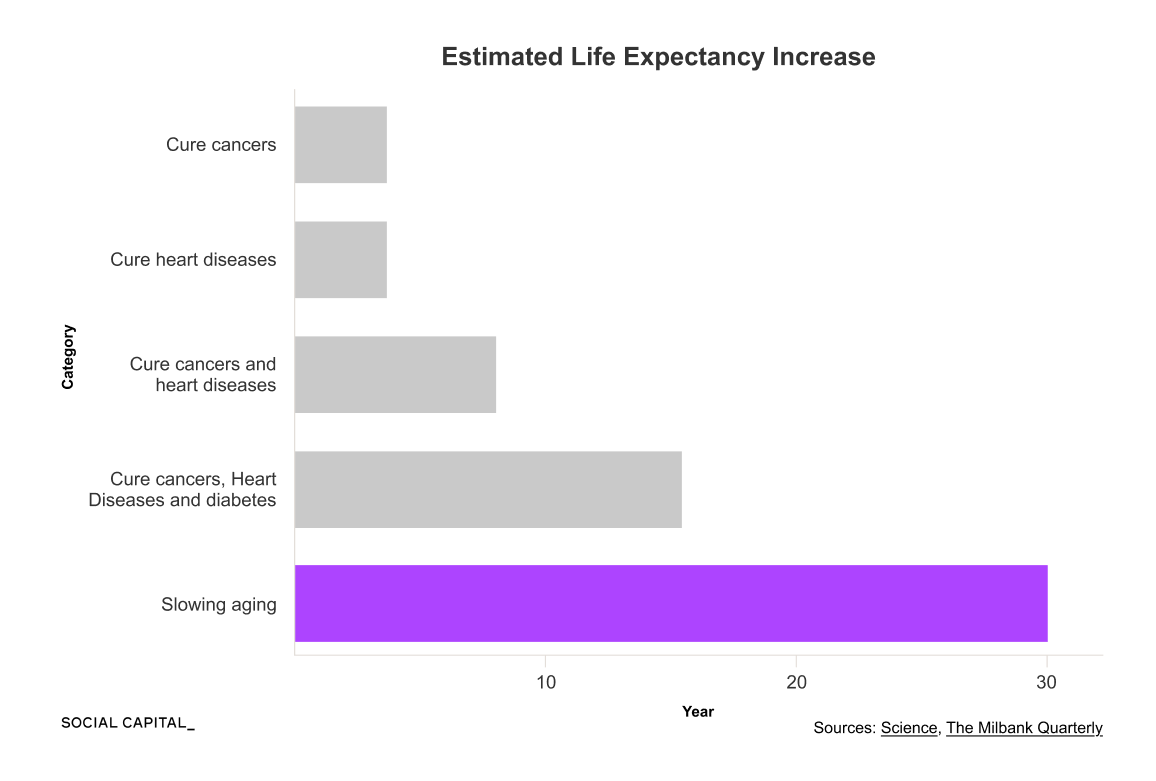
It is the single largest risk factor for many of the diseases that kill people in the modern world, ahead of smoking, blood pressure, or cholesterol. Cure cancer outright, and average life expectancy rises only about three years, because the underlying risk keeps compounding.
This is one of the premises behind longevity biotech: if aging is the one biological process that drives many diseases at once, then slowing it could delay all of them together, and let people live longer in good health.
The economic incentives are there as well. Slowing human aging by a single year has been estimated to add about $400B a year to U.S. GDP.
Animal evidence shows aging can be slowed. Calorie restriction has consistently extended lifespan in mice, with evidence dating back to 1935. In one mouse study, animals on the strongest calorie-restricted diet lived roughly 50 to 65% longer than controls.
A single gene change, or a drug like rapamycin started late in life, can do the same. And a few species, from the naked mole rat to some turtles, barely age at all, their risk of death holding flat as the years pass.
In humans, the evidence is thinner. A few common drugs, statins and the new GLP-1 medicines among them, already lower overall mortality in specific patient groups, but cutting deaths from one disease is not the same as slowing aging, and nothing has been approved to do the latter. Proving that one slows aging would mean a trial running for decades, outlasting its own patent, with no one able to profit from the result. And no regulator yet treats aging as a condition for which you can be prescribed something.
The money follows that logic. Research into the biology of aging receives $1-2B a year worldwide, ~0.25% of $350–400B in global biomedical R&D, even though it sits upstream of the diseases that consume most of the developed world’s health spending.
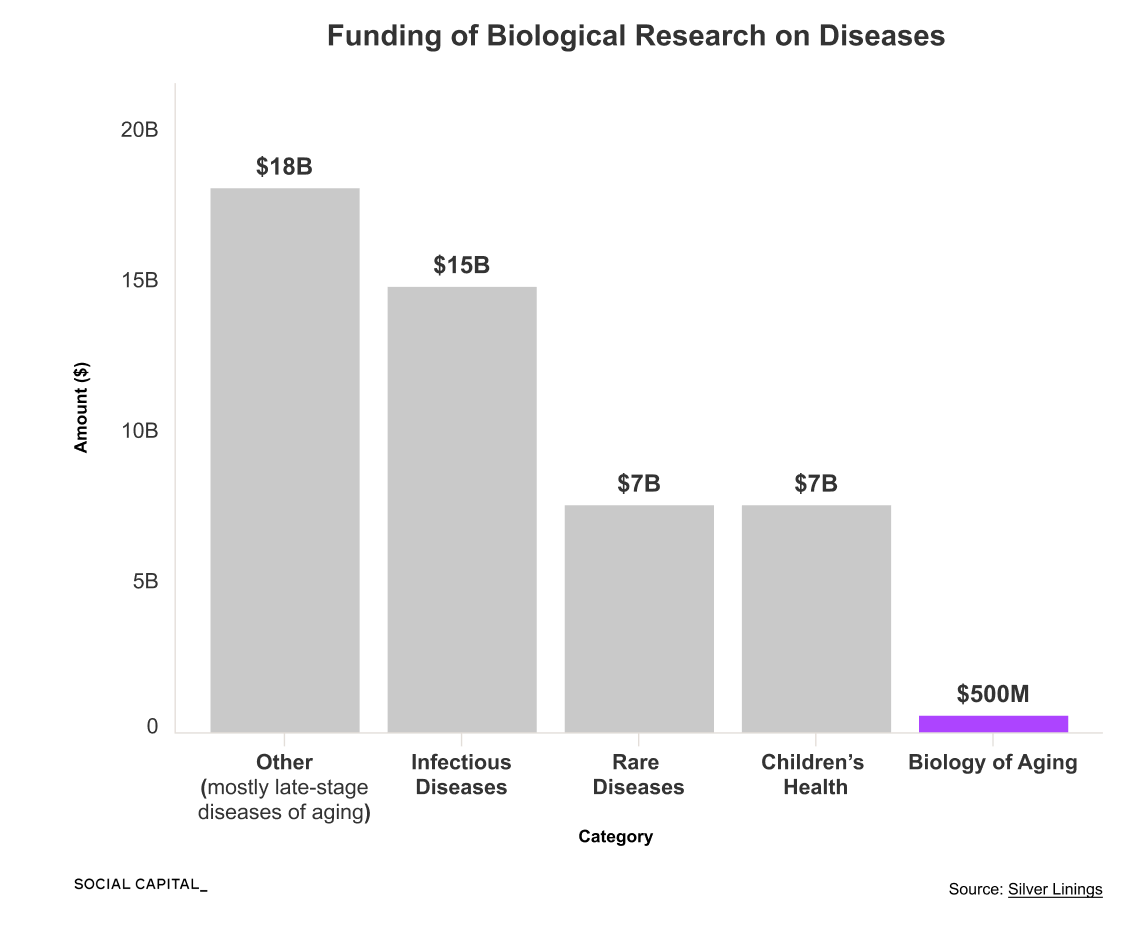
Aging is the largest shared risk factor of death, and the one we spend the least to understand. The therapy that could matter most is the hardest to ever prove. Whether aging is a problem we can engineer our way out of, or a biological limit we can only manage, is now one of the most consequential open questions in medicine.
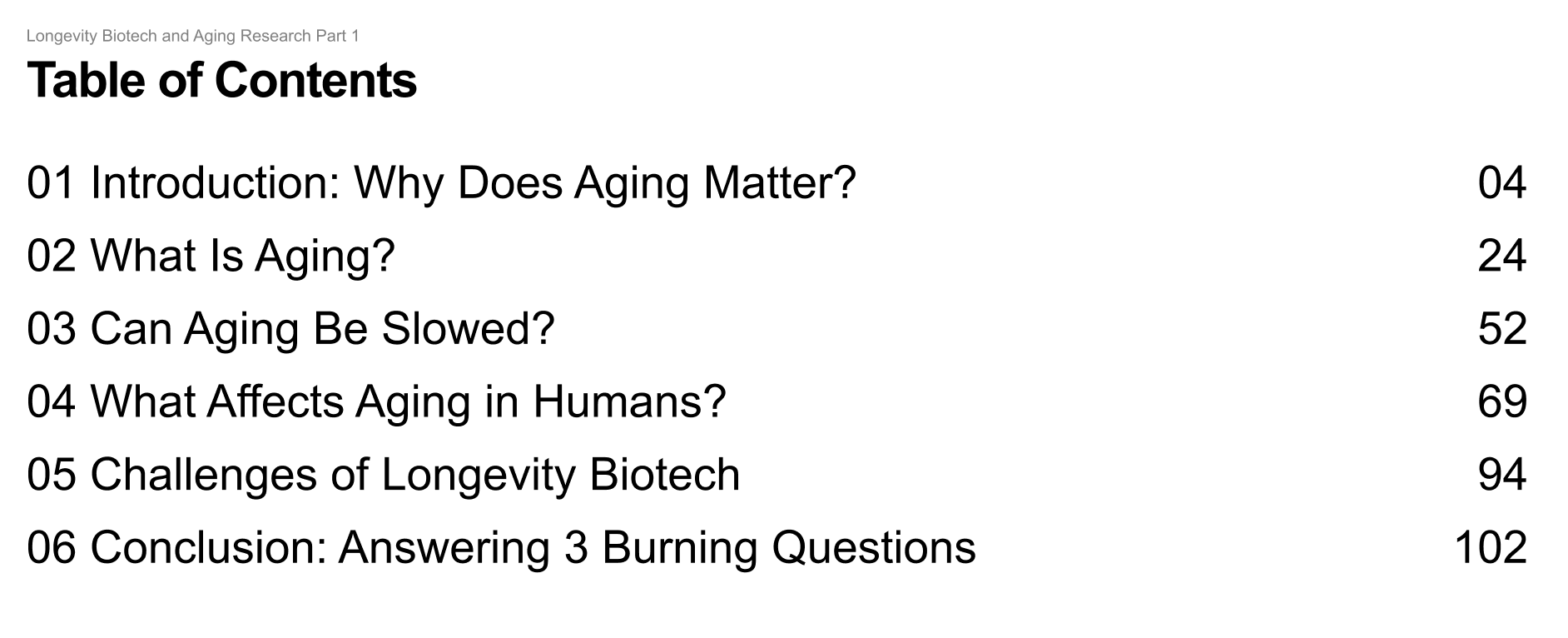
Our Social Capital team and industry research partners examined longevity biotech and aging research from first principles, and the 100+ page Deep Dive below maps our findings, including:
The two opposing theories of what aging is, and what each implies for treating it
A century of animal evidence on lifespan extension
What affects aging in humans
Why the 2014 metformin longevity finding does not hold up
The five interlocking causes of the funding gap afflicting aging research
Special thanks to Aleksandr Sviridov (@lex_sviridov) and his colleagues, whose rigorous research contributions helped shape this Deep Dive.
If you want to learn about the field of longevity with me, sign up below to read the full Deep Dive (and get all our past releases).
Chamath
Disclaimer: The views and opinions expressed above are current as of the date of this document and are subject to change without notice. Materials referenced above will be provided for educational purposes only. None of the above will include investment advice, a recommendation or an offer to sell, or a solicitation of an offer to buy, any securities or investment products.
Deep Dive PDF below ↓