
Deep Dive on Neuralink: Controlling Computers With Your Mind
Neuralink is pursuing one of the most difficult frontiers in technology. The implications include reversing neurological disabilities, modulating circuits involved in...
The human brain receives data at ~1,000,000,000 bits per second.
But it can act on and express only ~10 bits per second. This includes tasks like moving, thinking, and speaking. This is like being connected to fiber-optic internet, but only being able to respond through a 1990s dial-up modem.
An upgrade is needed, especially in a world racing towards increasingly capable AI.
In 2016, Elon Musk founded Neuralink to develop a scalable Brain-Computer Interface (BCI): a system that establishes a direct communication pathway between the brain’s electrical activity and an external device, bypassing traditional pathways (i.e., nerves and muscles).
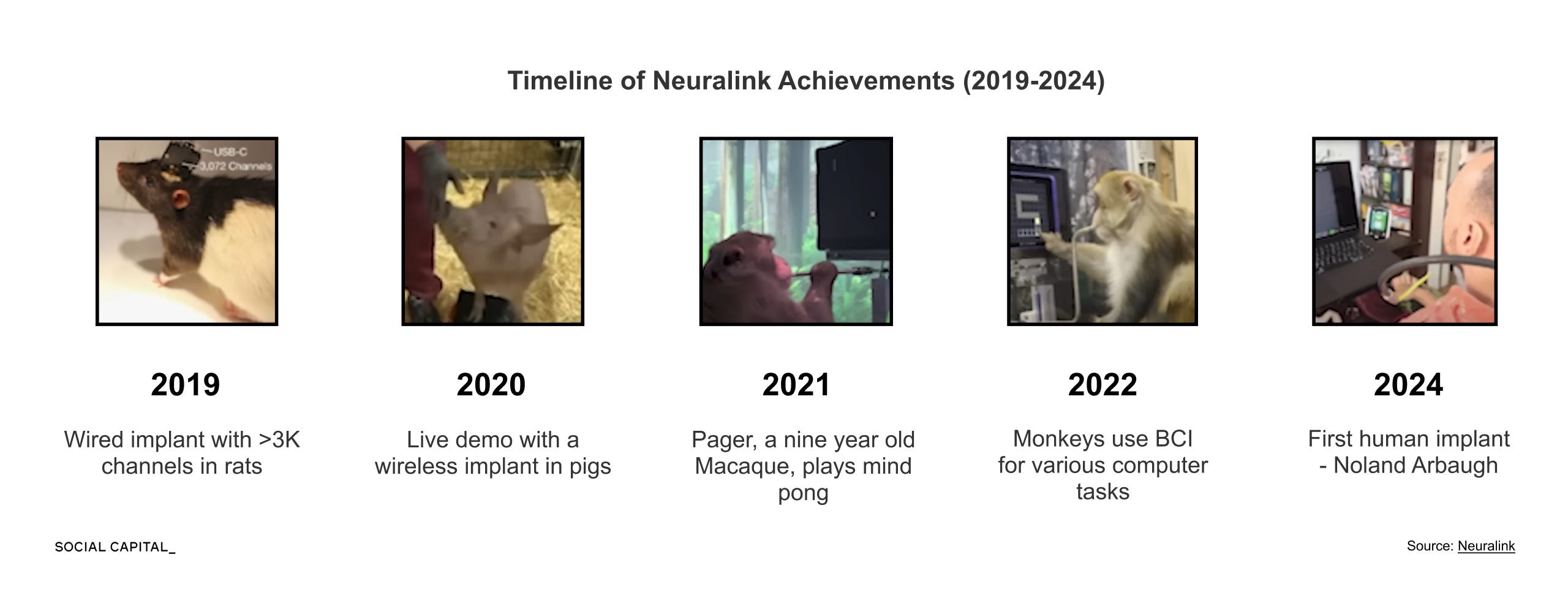
Neuralink progressed from wired implants in rodents to a wireless implant in the first human in only 5 years.
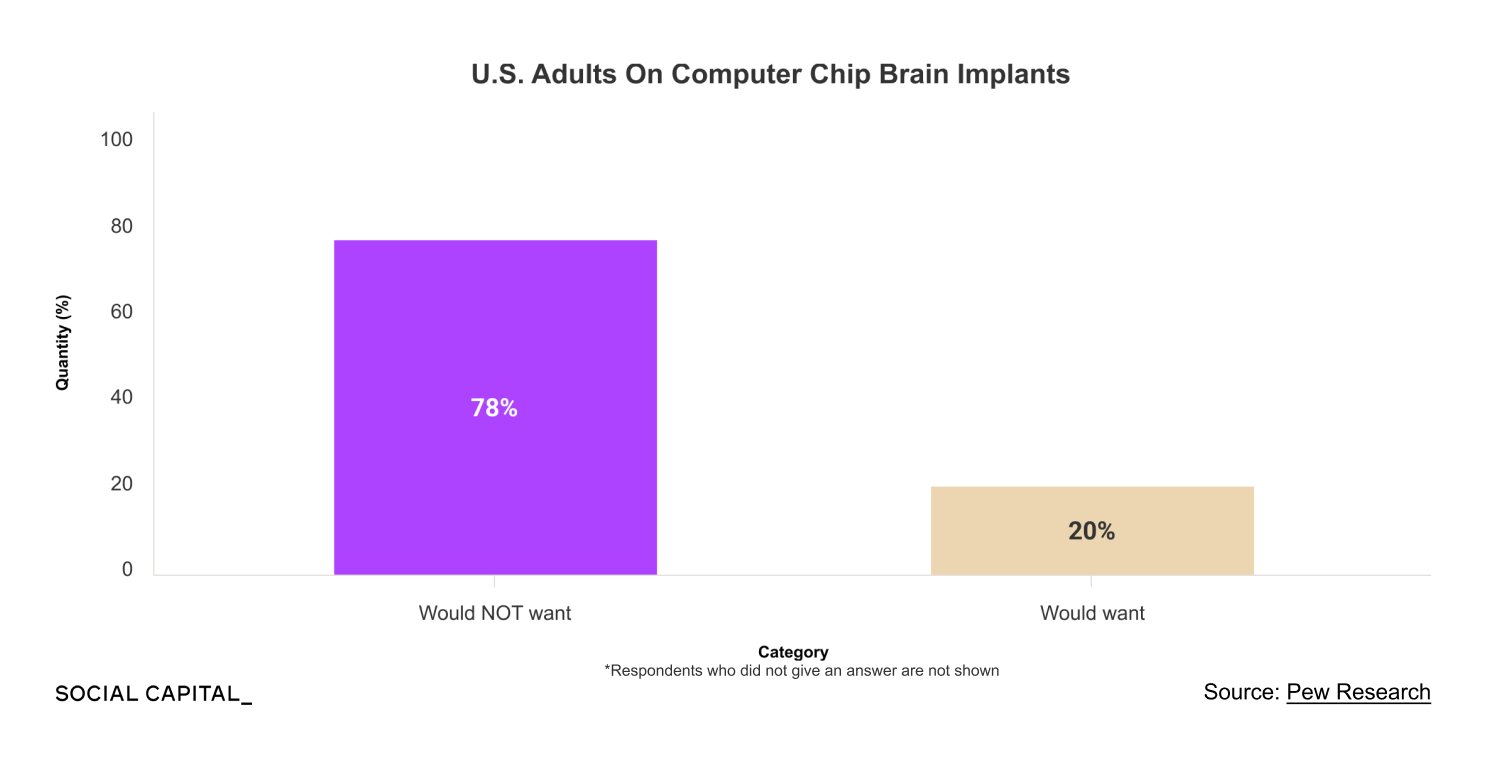
Brain chips, however, were unpopular with the general public. In 2021, a Pew Research Center study found that 78% would not want one for improved information processing, 56% said widespread use would be bad for society, and only 13% considered it a good idea.
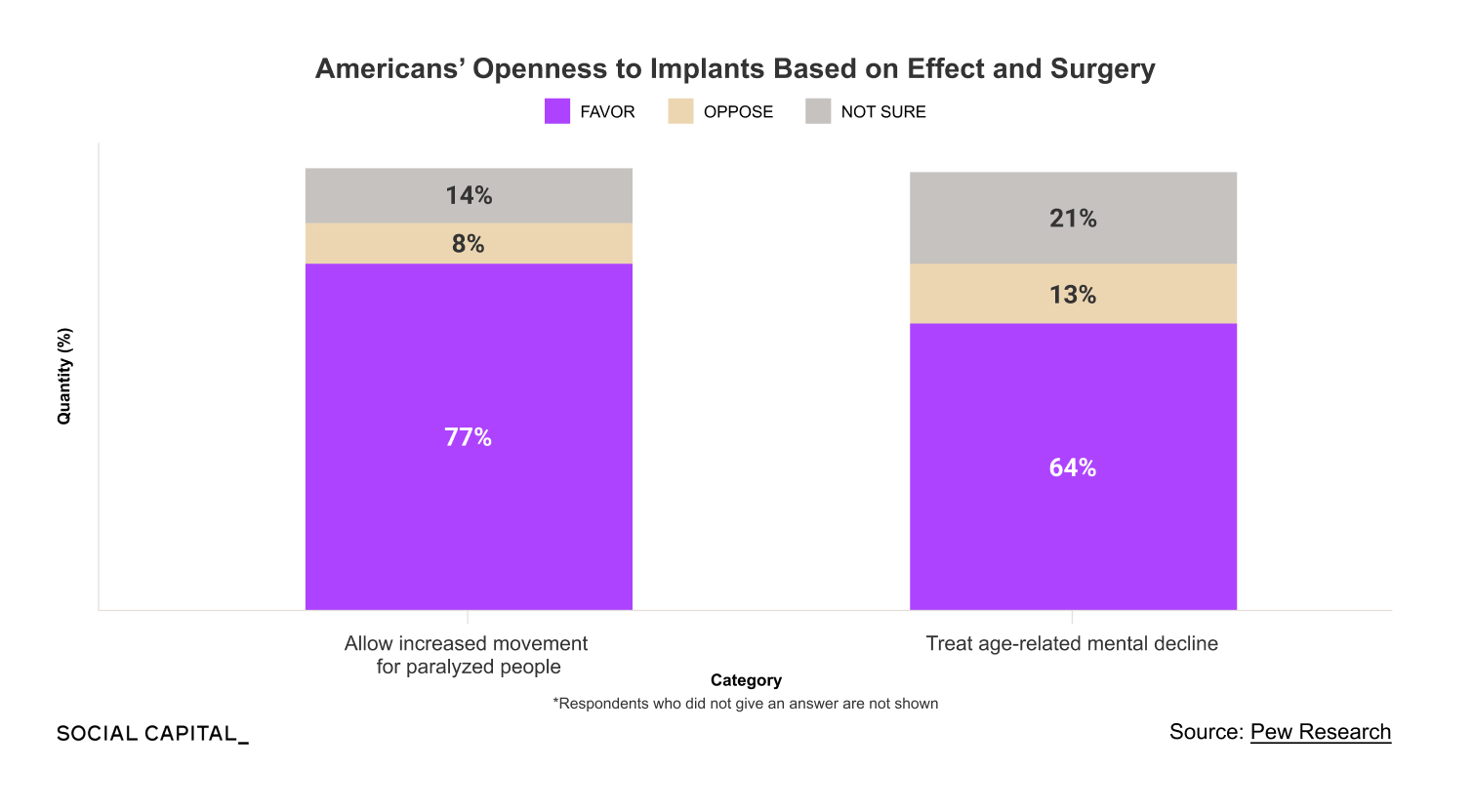
However, therapeutic use was widely accepted. 77% favor brain chips for paralysis treatment, and 64% favor them for age-related mental decline.
And that’s where Neuralink began.
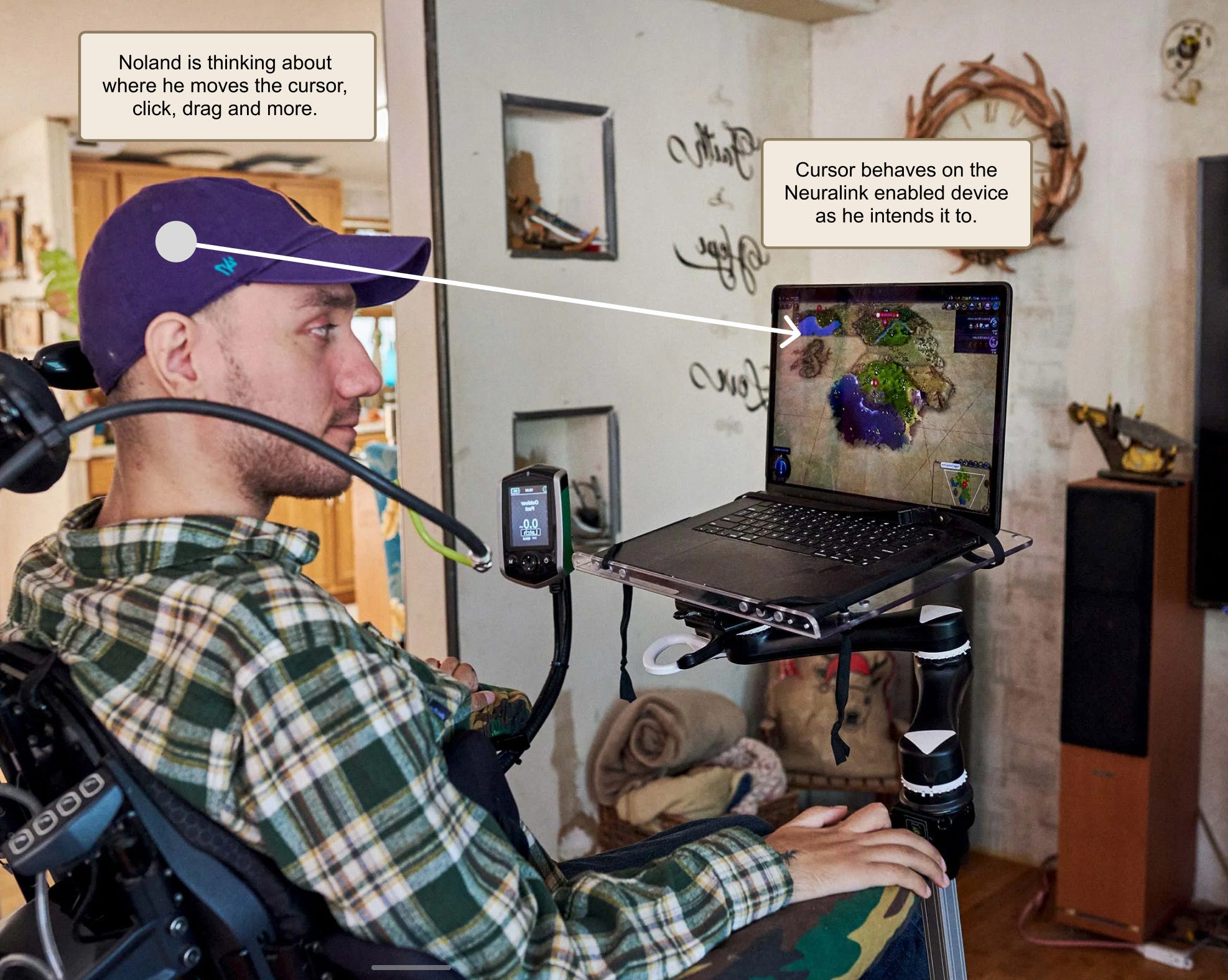
In January 2024, Neuralink conducted the first human implantation of the N1 chip in Noland Arbaugh.
Since then, Noland Arbaugh has used the N1 daily to regain digital independence, navigating the internet, learning online, communicating publicly, and controlling computers for work and play, including games such as chess and Civilization VI.
So how does Neuralink actually work?
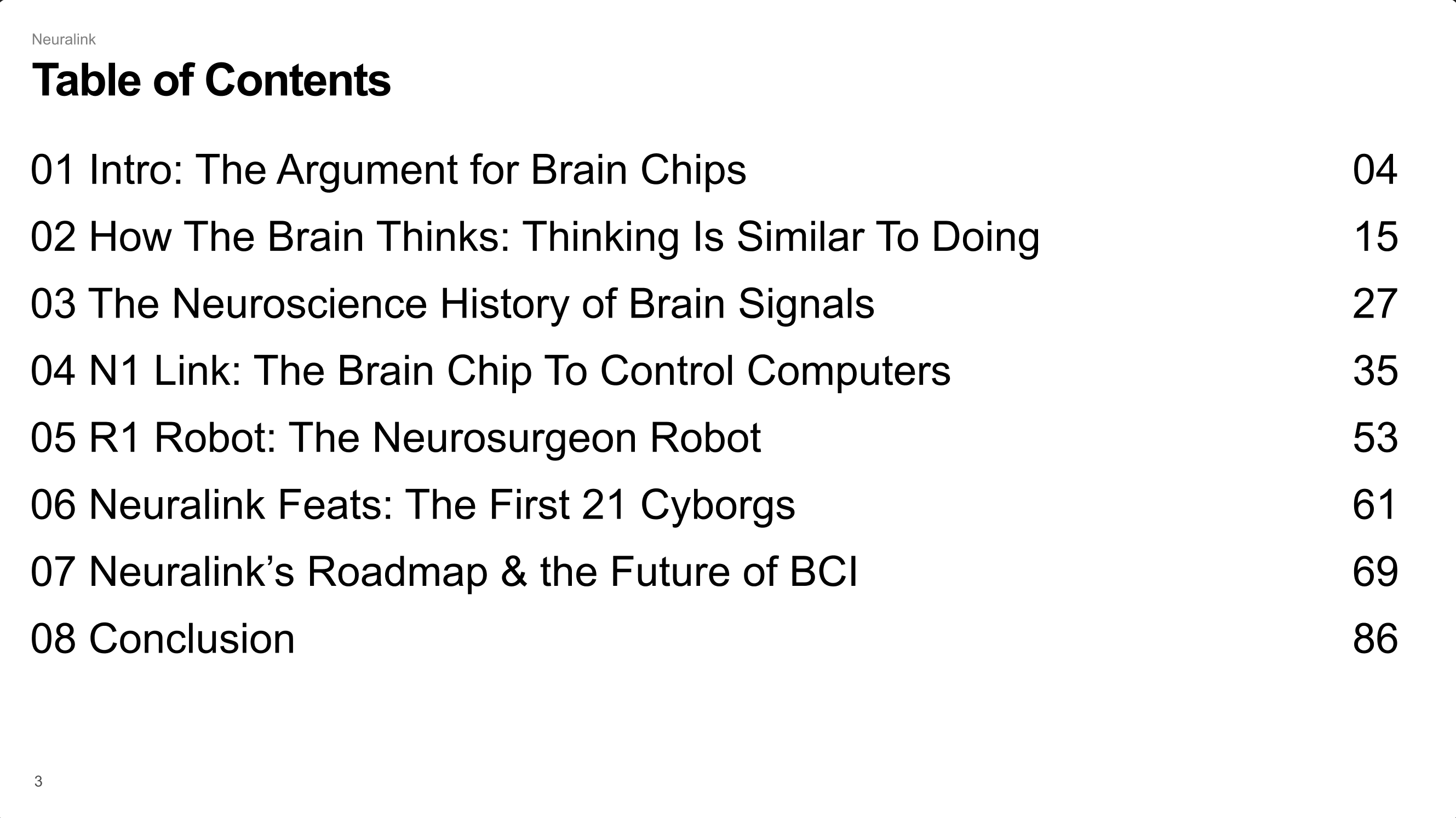
We go into further details in the Deep Dive below, but at a high level, the process of turning a thought into a digital action follows a five-step path:
1. Listening for Neural Signals
The process begins with 1,024 electrodes distributed across 64 flexible threads. These threads are implanted into the motor cortex, the brain region responsible for movement. Each electrode acts as a microscopic microphone, detecting electrical ripples from nearby neurons.
2. Amplifying and Digitizing the Signal
Raw brain signals are exceptionally faint, at roughly 15,000 times weaker than a standard AA battery. On-chip amplifiers within the N1 implant boost these signals to measurable levels while filters remove background noise. The chip then transforms the signal waves into a long stream of data for the computer to read.
3. Identifying Spikes
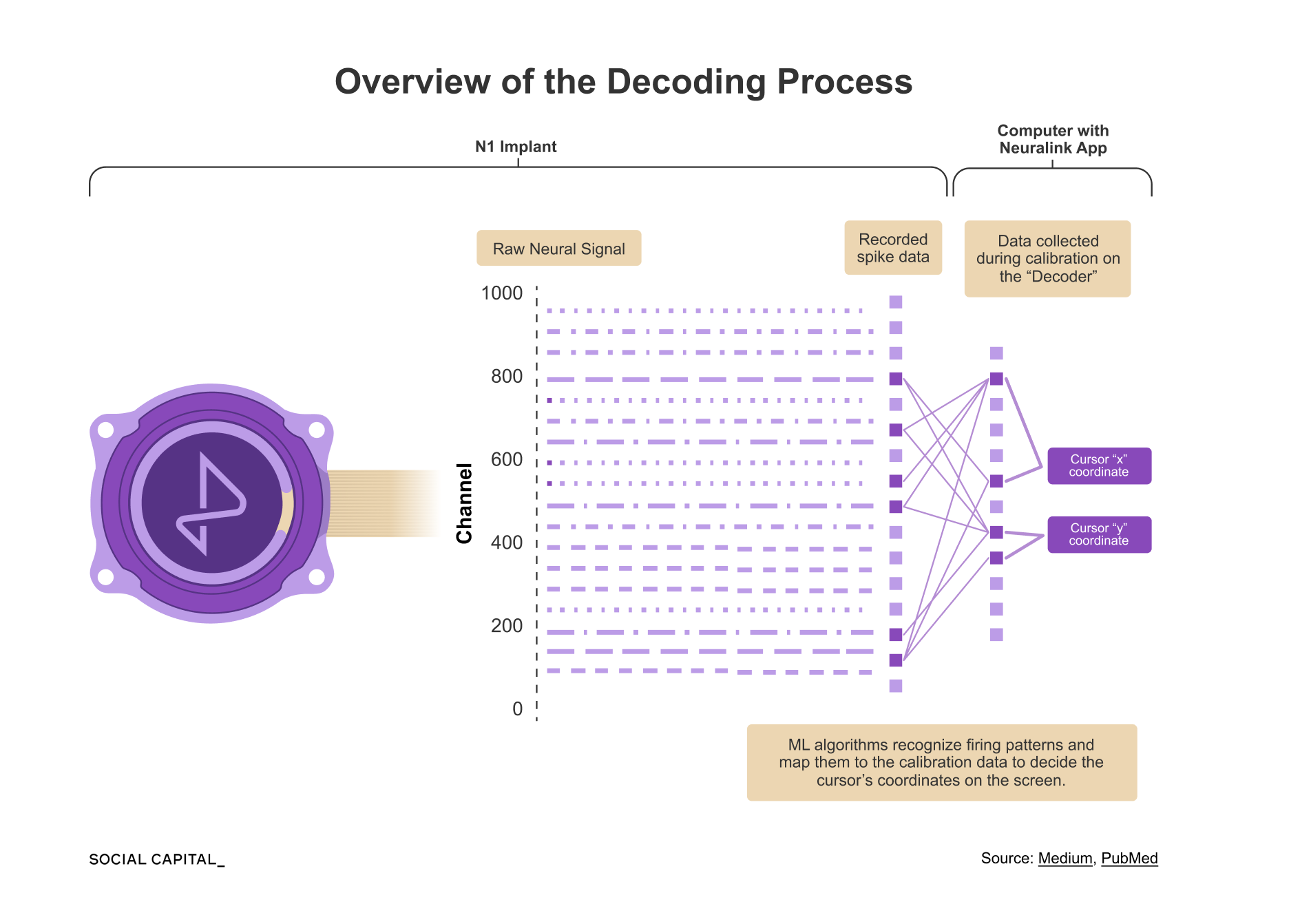
The N1 needs to identify meaningful signals in the data stream, known as spikes. It analyzes the unique shape of each waveform to attribute the activity to its specific source neuron.
4. Packaging and Transmitting Data
Transmitting raw neural data would be too slow and power-intensive. Instead, the N1 chip organizes the detected spikes into small digital packets. This compressed data is then sent wirelessly via Bluetooth to an external device, such as a smartphone or computer.
5. Decoding Intent into Action
Before a user can control a computer, the system undergoes a ~20-minute calibration. During this time, the user imagines specific movements (like moving a hand or squeezing) while the software learns which neural firing patterns correspond to those intents. Once trained, machine learning algorithms decode these patterns in real-time, moving a cursor on a screen dozens of times per second.
As of late January 2026, Neuralink has enrolled 21 participants in its worldwide clinical trials. These individuals use the implant for an average of 50 hours per week, controlling computers, playing games, browsing, and handling daily tasks entirely through thought.
21 participants represent a meaningful advance over the early animal trials. Yet Neuralink’s stated target is far larger: 10,000 implants per year by 2030, at an estimated total cost of $40,000 to $50,000 per patient.
Reaching that volume will require consistent long-term thread performance, further automation of the R1 surgical robot, streamlined regulatory pathways, and acceptance within medical systems. The challenges ahead are still substantial.
Neuralink also intends to expand beyond motor control. Future capabilities include restoring tactile sensation, enabling natural speech for individuals who have lost it, and restoring vision through a planned product, Blindsight, that directly stimulates the visual cortex with camera input.
What Neuralink has already proven makes this one of the most fascinating areas in technology right now. That is why we decided to research it in depth and create this Deep Dive.
Neuralink is pursuing one of the most difficult frontiers in technology.
The implications include reversing neurological disabilities, modulating circuits involved in depression or anxiety, enhancing memory and cognitive speed, and ensuring humans remain competitive as AI capabilities advance rapidly.
I invite you to learn with me. Let me know what you think in our Substack group chat.
Chamath
Disclaimer: The views and opinions expressed above are current as of the date of this document and are subject to change without notice. Materials referenced above will be provided for educational purposes only. None of the above will include investment advice, a recommendation or an offer to sell, or a solicitation of an offer to buy, any securities or investment products.
Deep Dive below ↓