
Deep Dive: SpaceX
SpaceX lowered the cost of reaching orbit by 20x, then used that advantage to build Starlink. The next question is whether the same route can unlock something even larger: broadband, AI compute, & ...
SpaceX is about to become the largest IPO in history.
That valuation is based on the thesis that SpaceX has opened the lowest-cost route into space, and that the largest opportunities are still ahead.
What is that opportunity, and can SpaceX capture it?
One useful analogy starts in 1497.
For centuries, spices reached Europe over land, via routes controlled by Arab and Venetian middlemen. By the time pepper arrived, the price had been marked up 20-30 times.
Vasco da Gama, a Portuguese mariner and explorer, found a sea path around the Cape of Good Hope, bypassing every middleman on that land route entirely.
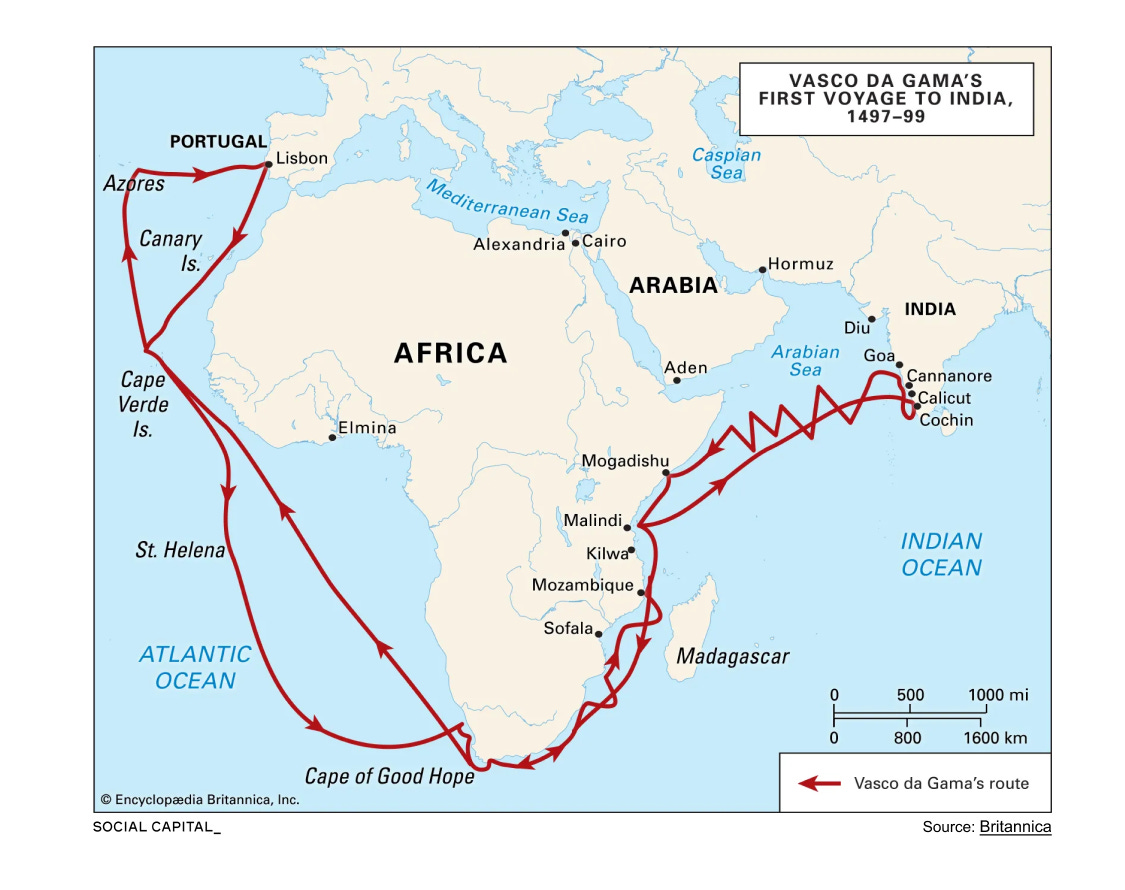
And that single move collapsed the entire cost structure of the trade. The companies that controlled the new maritime trade became some of the most valuable in history.
England chartered the East India Company in 1600 to sail the route itself. The Dutch followed with the Dutch East India Company (VOC) in 1602.
At its peak in 1720, the VOC’s market capitalization reached roughly a third of the Dutch Republic’s entire annual economic output, a share that dwarfs every company in existence today, including Nvidia and Apple.
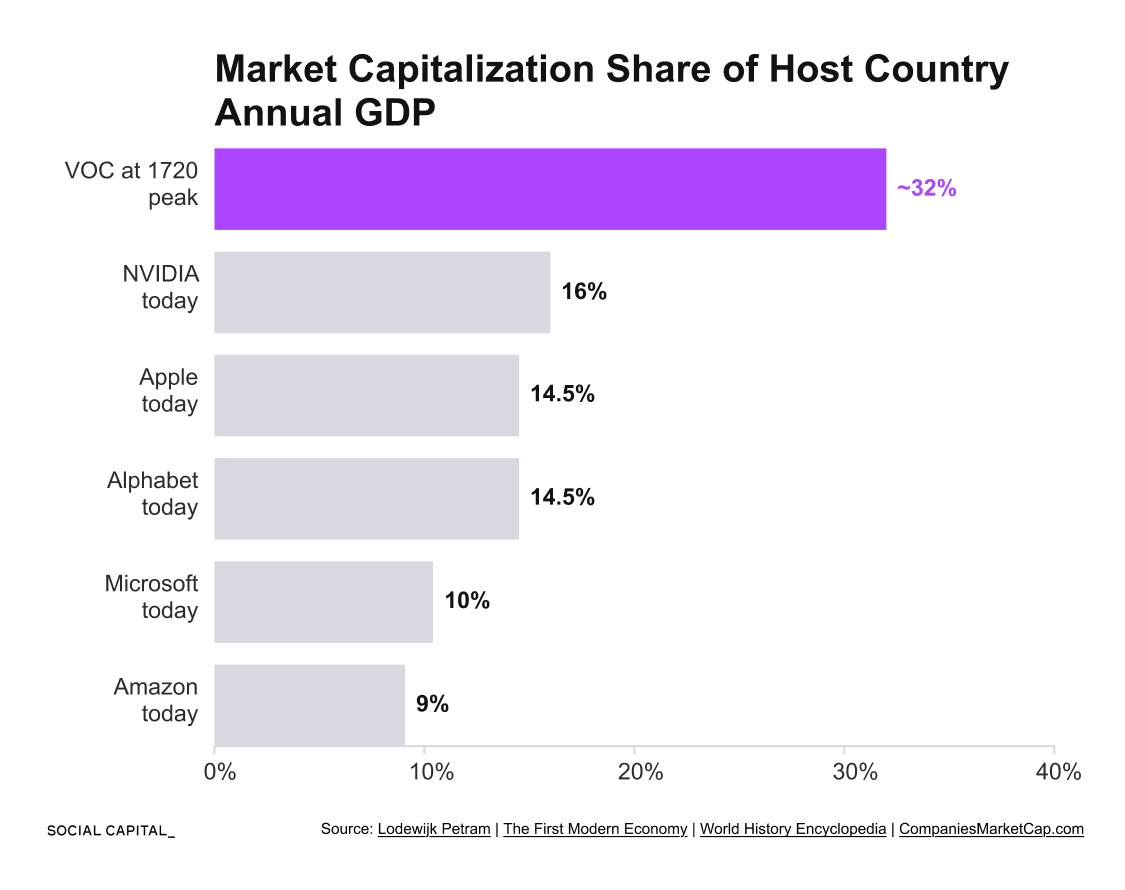
SpaceX is changing the economics of reaching space the way Vasco da Gama changed the economics of reaching Asia.
For European merchants, the prize was spices. For the modern economy, space opens three potential prizes:
Connectivity. Most of the world’s internet still depends on physical cables, and those cables do not reach everywhere. Starlink can beam broadband from orbit to anyone, anywhere.
Compute. AI data centers on Earth are hitting a power wall. A new data center needs a grid connection that takes years to permit, and electricity is getting scarcer and more expensive. Space offers the potential of abundant solar power without the same land, grid, and permitting constraints that data centers face on Earth.
Critical minerals. The rare earth elements that AI chips and energy storage depend on are largely controlled by China. The Moon and the asteroid belt hold reserves that dwarf anything on Earth, outside any single country’s supply chain.
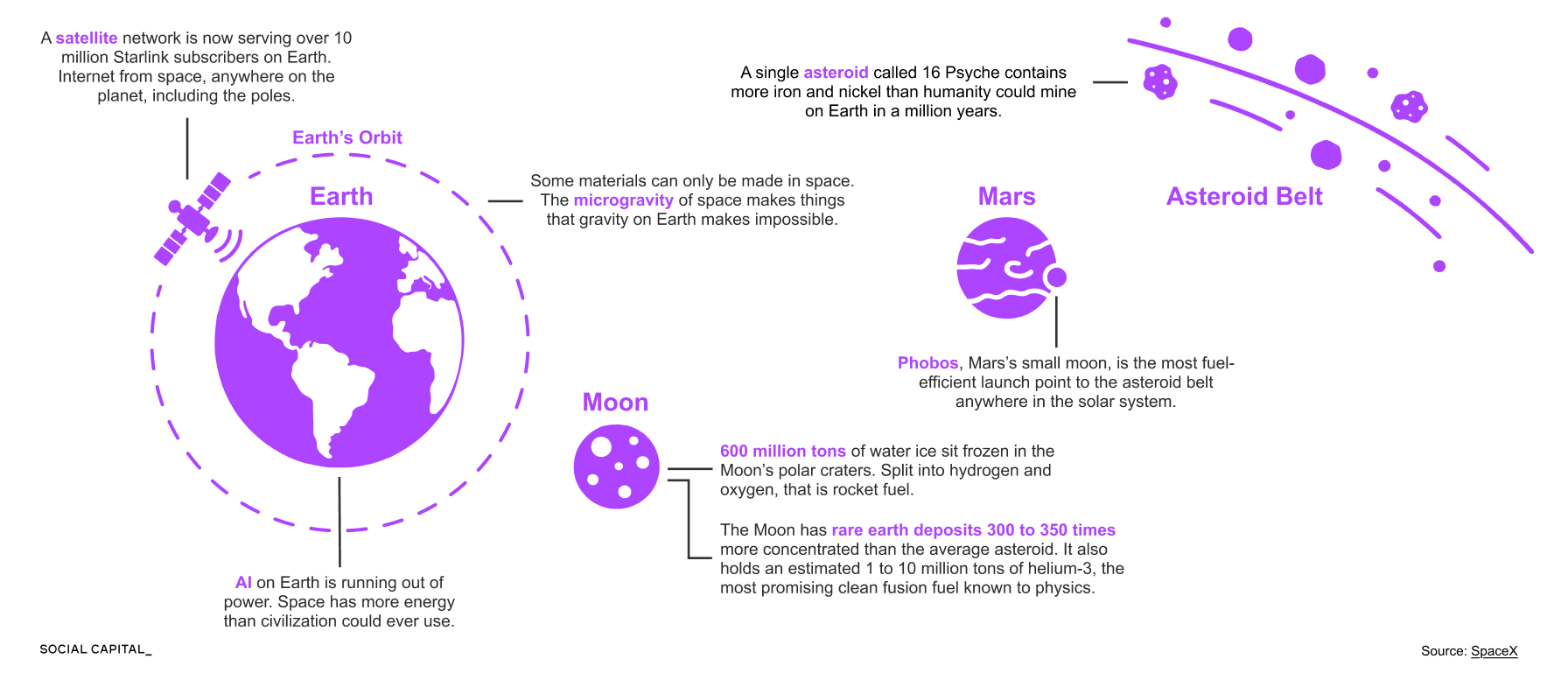
All of it sits behind one barrier: the cost of reaching orbit.
For sixty years, reaching orbit cost so much that only governments could afford it. But SpaceX changed that.
In 2025, they launched 85% of all satellites, more than every other space program on Earth combined. They did it by making rockets reusable, increasing launch cadence, and bringing more manufacturing in-house.
NASA’s Space Shuttle cost $54,500 per kilogram to reach low Earth orbit. SpaceX drove that number down to $2,720, a 20x reduction, documented in NASA’s own cost analysis. (The deep dive below breaks down exactly how they did it.)
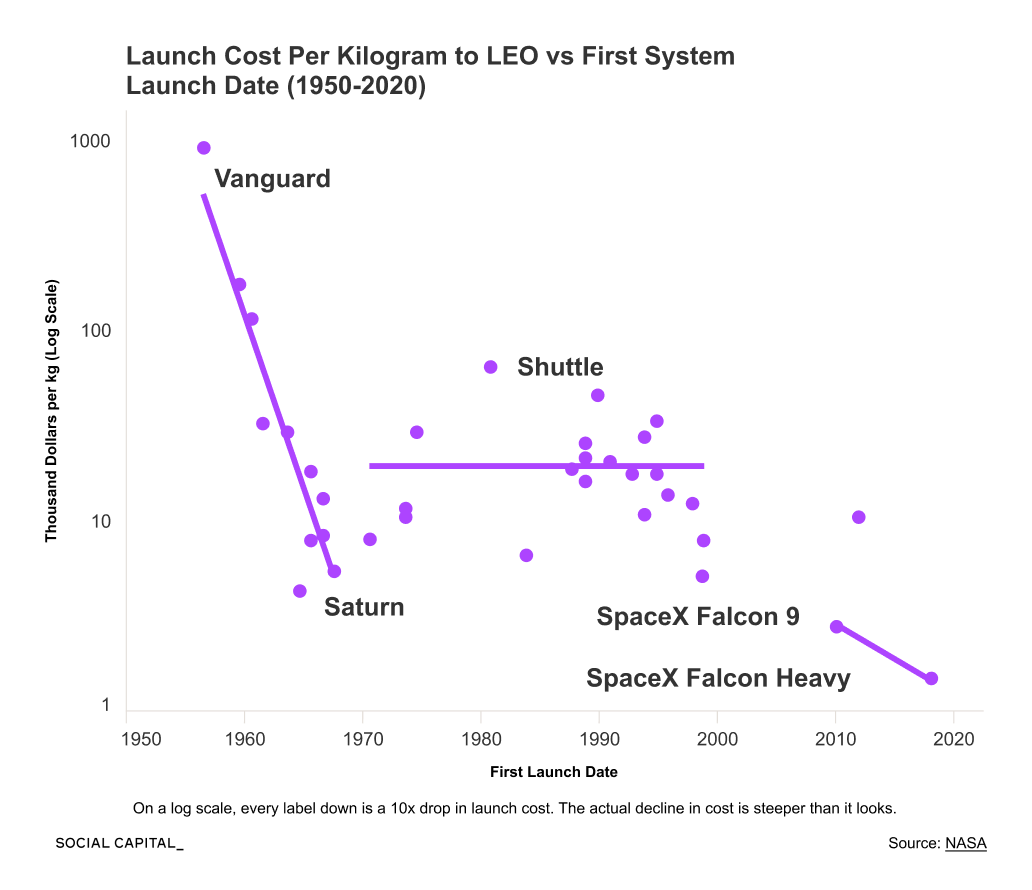
SpaceX now sits on the main commercial route to orbit, and Starlink is the first proof of what that route can unlock.
Cheap launch let SpaceX build the world’s largest satellite internet network and refresh it faster than anyone else. Starlink turned access to orbit into $11.4B of recurring broadband revenue in 2025.
The same route that made orbital broadband possible may now reveal the next frontier opportunity for SpaceX: orbital compute.
That is the opportunity we wanted to understand. My research team at Social Capital spent months speaking with industry leaders and investors, reviewing hundreds of hours of material, and stress-testing the SpaceX story from the ground up.
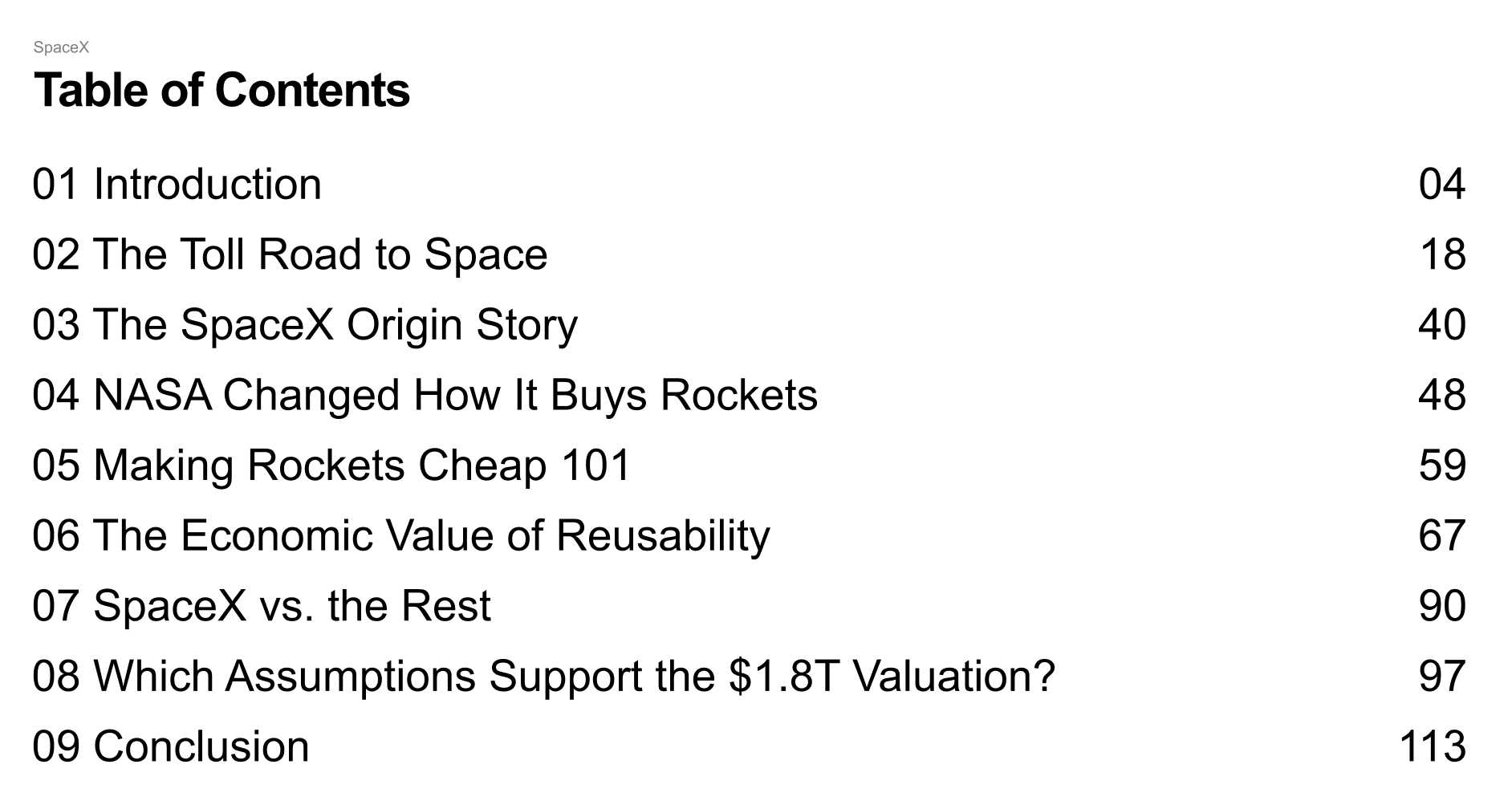
We put it all into a 120+ page Deep Dive: what SpaceX has built, what this route can unlock next, and where the constraints remain.
A few things we cover inside:
How SpaceX went from near-bankruptcy in 2008 to outlaunching every space program on Earth, and why that lead is nearly impossible to replicate.
What SpaceX makes possible once launch becomes cheap, reusable, and routine, and how satellites can compete for the $2.1T telecom market.
Starlink: the satellite business posting software-grade margins inside an aerospace company
Orbital compute: the xAI merger, the AI-1 satellite, and the next bet the valuation is pricing in
Read the deep dive and let me know what you think.
Chamath
Disclaimer: The views and opinions expressed above are current as of the date of this document and are subject to change without notice. Materials referenced above will be provided for educational purposes only. None of the above will include investment advice, a recommendation or an offer to sell, or a solicitation of an offer to buy, any securities or investment products.
Deep Dive PDF below ↓