
Deep Dive: Where Value Accrues in the AI Stack
How should we think about AI in 2026? The stack we drew has six layers, from the bottom up: infrastructure, chips, data, models, execution, and application. Each layer has its own fulcrum...
How should we think about AI in 2026?
Well, the first generation of internet companies had a map. It was called the OSI stack, a conceptual framework that demarcated where one layer of computing ended and the next began. Get the boundaries right, and great companies get built on top of them. Intel. Cisco. Broadcom. Oracle.
The question now is what the conceptual stack for AI looks like.
There will be a stack we will one day look back on and use to explain every company that mattered in this era. The opportunity is to draw it now, while the boundaries are still being set and the fulcrum assets are still being claimed.
So we set out to map it.
Where does it start? Where does it end? Where does it fork? Which layers compound value, and which get commoditized? Who owns the fulcrum assets that pivot the rest of the stack? We spent the first quarter of 2026 answering these questions. This deep dive is the map.
The Six Layers
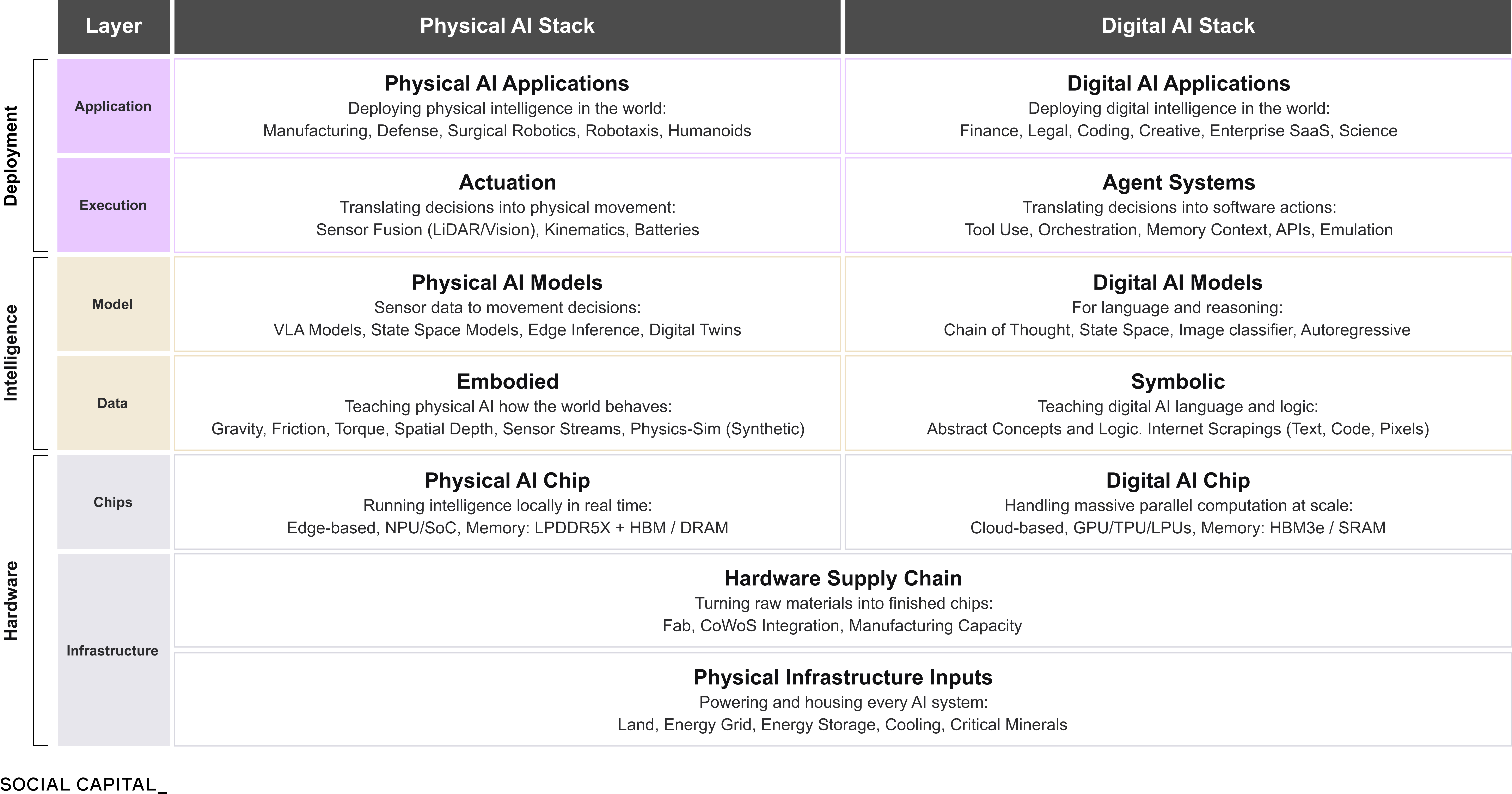
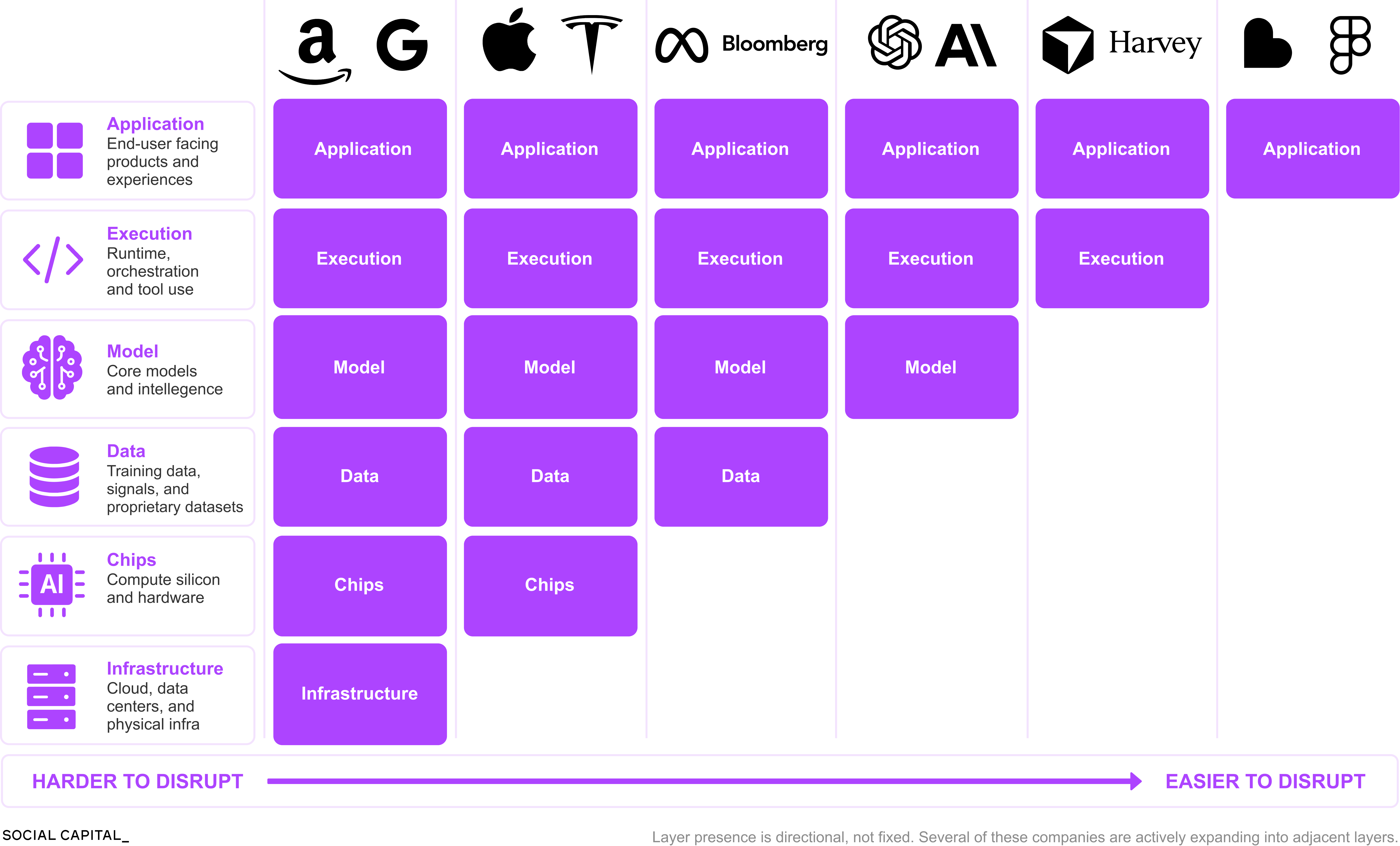
The stack we drew has six layers, from the bottom up: infrastructure, chips, data, models, execution, and application. Each layer has its own fulcrum assets, single points every unit of value above them has to cross. The companies that sit on the non-obvious ones are the ones the next forty years of computing will be built on top of.
The Foundation Is Concentrated
Starting from the bottom, the foundation is power, cooling, and critical minerals. Infrastructure is the most concentrated layer in the stack, and the concentration is global.
ASML in the Netherlands makes the machine that prints every advanced chip in the world. Four companies in Japan supply the film that no chip can ship without. A single mine in North Carolina sits underneath every wafer in production. The most American piece of the AI stack, NVIDIA’s CUDA, runs on top of all of it.
Rockefeller had 90% of refining by 1880, Cisco had 85% of routing by 2000, and the same pattern is forming now.
The Stack Forks
At the chips is where the stack forks.
On one side is software AI. The price of running a model has dropped 1,500x in six years, and intelligence is becoming free. The bet here is what I like to borrow from Elon and call “the machine that makes the machines.” Above models sit the agents and applications people will use every day. The question is who builds the system that produces them.
On the other side is physical AI: anything that has to operate in the physical world. Two things stand out: energy storage and actuation. The greatest robot in the world is dead the moment its battery runs out, and a robot that cannot move is as useful as an inanimate brick. The question is who owns the supply chains beneath them.
These two forks compound on very different curves. A handful of names already sit on the boundaries that matter.
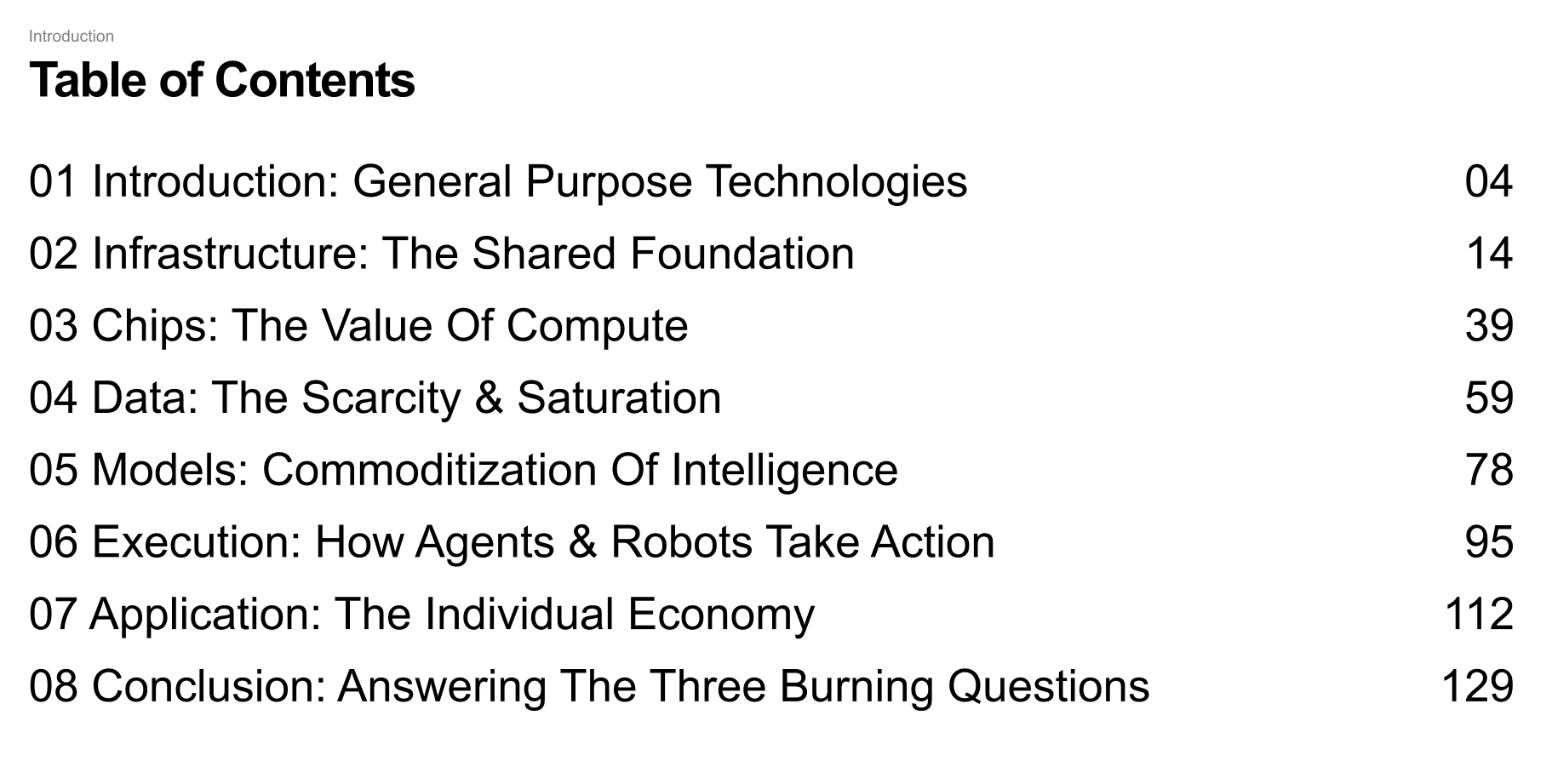
The 138 pages below are the full map of our AI stack research. Here is what you will find:
The six-layer framework and what each layer covers
The fulcrum assets at each layer
The foreign chokepoints underneath the American software stack
The collapse in model prices and what it means above the silicon layer
The fork into software AI and physical AI
The companies already positioned at each fulcrum asset
Every era of computing has been won by the people who got the stack right. This is the clearest view we have of where AI is going.
Read below and let me know what you think in the group.
Chamath
Disclaimer: The views and opinions expressed above are current as of the date of this document and are subject to change without notice. Materials referenced above will be provided for educational purposes only. None of the above will include investment advice, a recommendation or an offer to sell, or a solicitation of an offer to buy, any securities or investment products.
Deep Dive PDF below ↓