
Midjourney 60s MRI Alternative Scanner
A summary of the interesting content that I consumed this past week…
What I Read This Week: a summary of the content that I consumed this past week…
Caught My Eye…
1) Chinese Open Model Reaches the AI Frontier at One-Sixth the Price
On June 16, the Beijing lab Z.ai released GLM-5.2, a frontier model with open weights anyone can download under an MIT license, and a million-token context window.
It beats GPT-5.5 on several long-horizon coding benchmarks at roughly a sixth of the price. This means on some benchmarks, the best model available to the public is an open one from China.
Its efficiency comes from its architecture and training. GLM-5.2 is a mixture-of-experts model: about 744 billion parameters in total, but only roughly 40 billion fire for any given token, so it answers at the cost of a far smaller model. It also uses a sparse-attention scheme borrowed from DeepSeek that lets it read a million tokens of context without the bill scaling with every word.
Additionally, they organized the post-training run around agentic engineering, getting the model to write and debug its own code over long stretches rather than only answer questions.
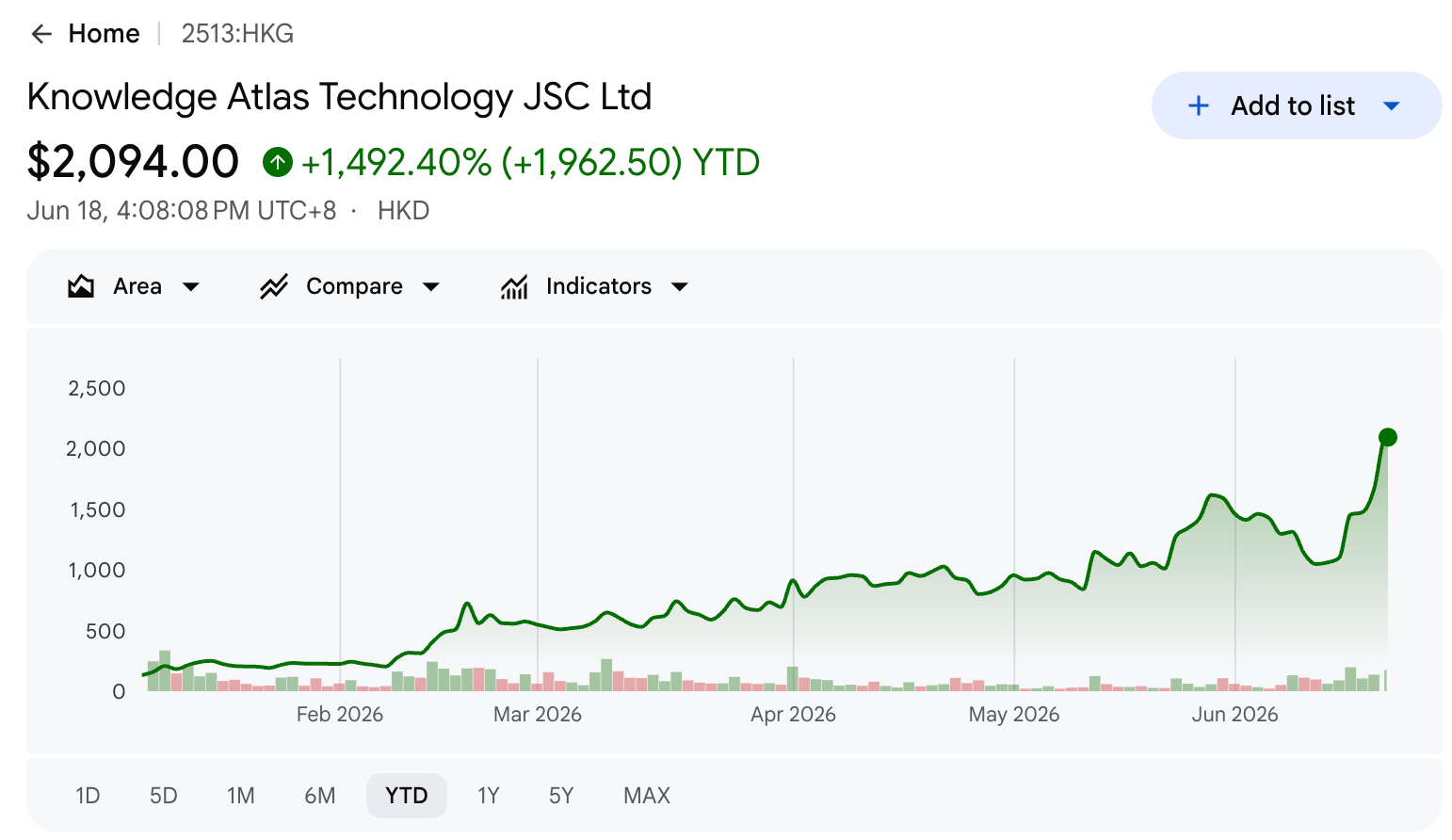
On the Artificial Analysis Intelligence Index, it sits #3, making it the best open weight model on the market today. Its stock on the Hong Kong exchange continues to hit new all-time highs since its IPO in Jan 2026.
Elon believes China will be able to develop a Mythos-class model by Q1 2027, and Tang Jie, the founder of Z.ai, says it will come sooner.
Enterprise buyers are already reaching for cheaper open models as token costs ramp up while quality gaps close. On June 16, Axios reported that Microsoft is weighing a self-hosted, fine-tuned version of DeepSeek V4, another Chinese open model, as a lower-cost engine for Copilot Cowork.
2) Midjourney Is Building a 60-Second Alternative to MRI
On June 17, Midjourney, the AI lab known for generating images from text prompts, announced a medical division and a machine that scans the whole body in minutes.
You stand on a platform that then lowers and submerges into water. It is lined with roughly 500,000 sound emitters, each the size of a grain of sand, that map soft tissues and bones. No radiation or magnets. The output is a 3D map of soft tissue and bone down to half a millimeter in resolution, with MRI-like quality.
A full-body MRI takes 60 to 90 minutes; Midjourney’s first prototype currently takes about 20 minutes, with a goal of reaching 60 seconds.

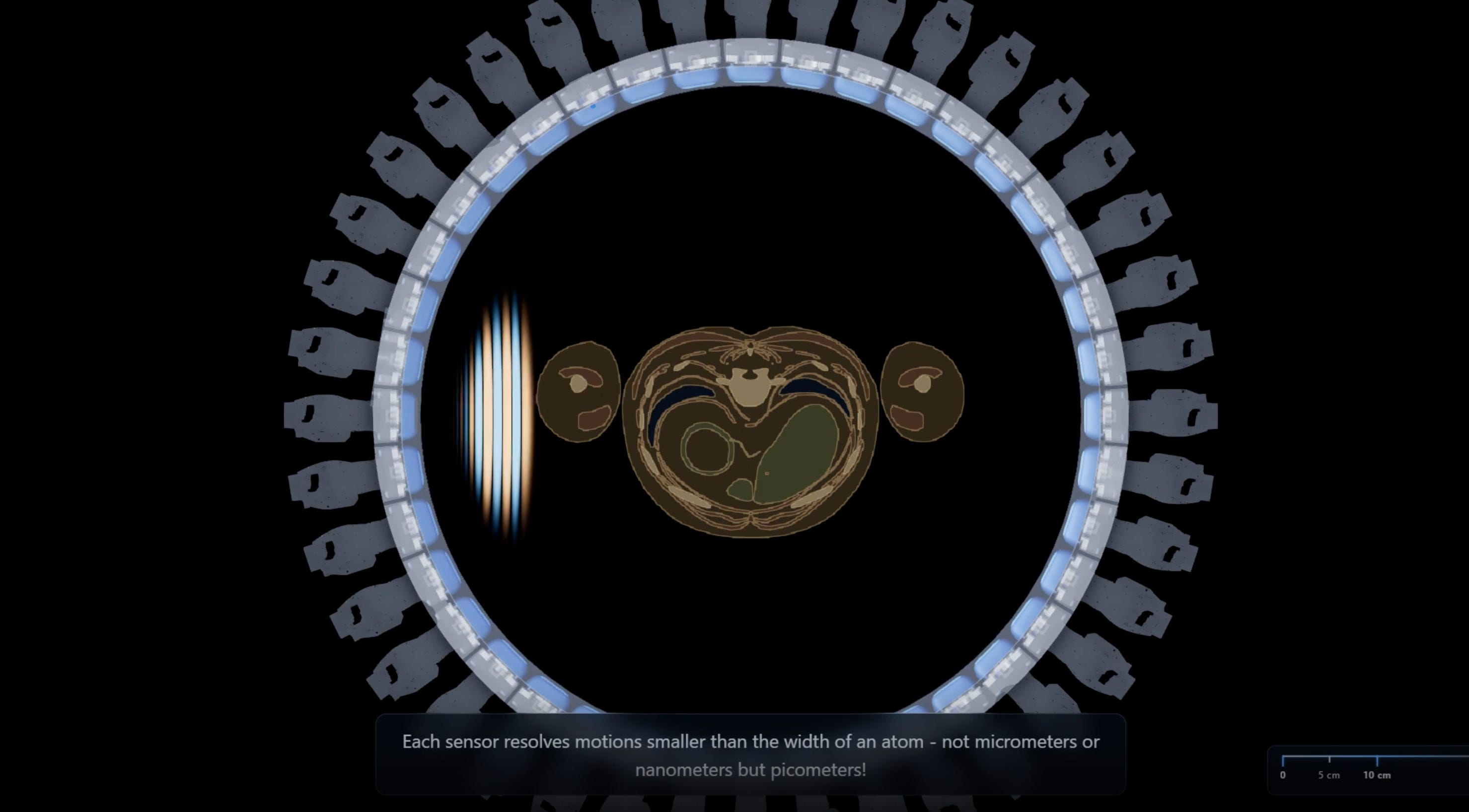
The ring is lined with roughly 500,000 ultrasound sensors built on Butterfly Network’s computer chips. Each sensor sends out sound waves and records the echoes that reflect off the body, generating terabytes of raw data. The challenge is reconstructing those echoes into a detailed 3D image. Processing the roughly 17 gigabytes of data generated every second requires 21 servers providing about two petaflops of computing power.
Midjourney is in a unique position with no outside investors and was profitable within months of its public launch in 2022. It surpassed $500m in ARR in 2025.
The goal is to build 50,000 scanners doing a billion scans a month by 2031, installed in spas where the scan is a side effect of a soak. The first opens in San Francisco next year. The FDA path also starts narrow, with body composition maps first rather than diagnostic medical capability. They will submit regular test results to the FDA to get approval for more advanced capabilities as they advance their hardware.
3) Anduril Wins the Fastest Fighter Production Contract in 50 Years
On June 17, the Air Force moved its Collaborative Combat Aircraft program into production, awarding contracts to Anduril and General Atomics to build their uncrewed fighters. Collaborative Combat Aircraft are semi-autonomous jets designed to fly alongside crewed fighters like the F-35, carrying weapons and sensors at a fraction of the cost of a piloted plane.
Anduril’s aircraft FQ-44 drops its prototype label and enters serial production. The production line at Arsenal-1 in Ohio can already produce up to 150 aircraft a year, with modular tooling that allows for expansion and iteration.

Anduril is nine years old, and this is the first time a new company has won a U.S. fighter program since the 1970s. It went from prototype award in April 2024 to first flight last October to a production contract this month, representing the fastest path for a fighter in more than 50 years.
The contract lands a month after Anduril raised $5 billion at a $61 billion valuation, double its worth a year earlier.
4) Fox Buys Roku for $22 Billion
On June 15, Fox agreed to buy Roku for about $22 billion, paying $160 per share, a 34% premium over Roku’s June 11 close.
Roku is the connected-TV platform that sits on more than 100 million households’ screens and runs The Roku Channel. Fox already owns Tubi, which means it now has two industry leaders of the free ad-supported streaming television (FAST) market. The deal is set to close in the first half of 2027, pending antitrust review and a shareholder vote.
What Fox is buying is the home screen and the data behind Roku. Roku is the most-used TV operating system in the US, ahead of Samsung. Roku can also see everything that plays on the screen, every show, ad, and app, from any source, through automatic content recognition. That viewing data is what makes its ad targeting valuable.
The purchase reverses a trade Fox made six years ago, when it sold its 5% stake in Roku to help pay for Tubi. Now it owns the whole platform. The combined company would rank third in US television by share of viewing, just behind Disney and YouTube.
Learn With My Friends and Me…
All-In: World’s First Trillionaire, Anthropic Fable Banned, The New Oligarchs, Iran Peace Deal
Deep Dive: The Federal Reserve Explained

For two decades, investors built portfolios around a Fed that telegraphed its next move. Kevin Warsh has a different vision. Here is how the Fed works and what Warsh wants to change…
Other Reading…
Agentic Coding and Persistent Returns to Expertise (Anthropic)
Dear A.I. Companies: The Doom Trolling Needs to Stop (The New York Times)
Block rolls out Builderbot (Block)
On X…


The Chinese models are undoubtedly cheap and probably as good. The question is, will you trust them inside your enterprise code?
I think you're going to have to develop an industry that audits the source code in terms of where it comes from, because you're going to have some end applications in defense, for example, that will want a clear chain of command on where the code is coming from. Exploring the Chinese code will probably make it very difficult to get into that supply chain.
I wonder if we shall see the headline that a Chinese model pushed the AI frontier forward by a meaningful amount at 1/6th of the cost